“Key stats show strong growth, high buyer self-research (75%), reliance on testimonials, and increasing adoption of AI in marketing teams, while content marketing (blogs, video) drives leads and customer acquisition” – states citrusbug.com
Much like any other business, SaaS companies need a custom marketing plan. The goal is awareness and reaching the right audience. This means using marketing tools, both creative and otherwise, to design a brand identity that explains and simplifies what you can do for your prospective client.

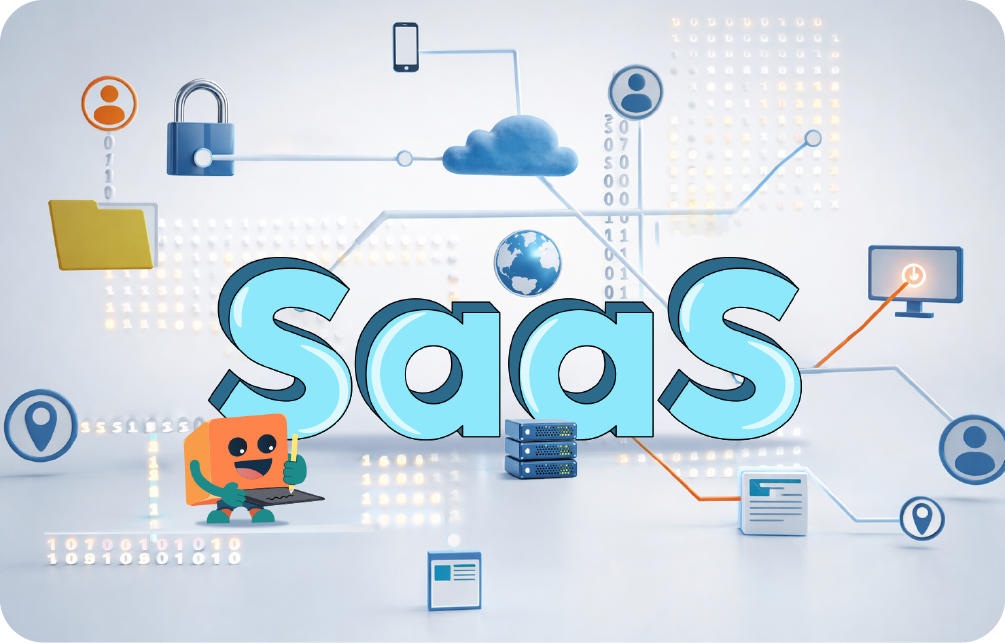
A Software as a Service (SaaS) company delivers software through the internet rather than as a locally installed product. Users access the software via a web browser or mobile app, while the provider owns, hosts, and manages the underlying infrastructure.
SaaS companies store customer data in the cloud, allowing users to access their tools and information from any device with an internet connection.
The provider is responsible for maintenance, security, and software updates, removing the need for in-house servers or manual upgrades.
Most SaaS businesses operate on a recurring pricing model, such as monthly or annual subscriptions, usage-based fees, or tiered plans. This structure enables customers to scale their usage as their needs change.
To improve efficiency and affordability, many SaaS platforms use a multi-tenant architecture, where multiple customers share the same system while keeping data securely separated. This allows SaaS products to scale quickly and serve businesses of all sizes.
To qualify as SaaS, the software must be fully cloud-delivered. Products that require local installation or customer-managed hosting do not meet the core definition of a SaaS company.

SaaS marketing is the practice of promoting cloud-based software that customers access through subscriptions rather than ownership. Instead of selling a finished product, SaaS marketing communicates the ongoing value of a service that evolves.
In most cases, users do not physically receive or install the software; SaaS marketing focuses heavily on clarity, education, and proof of usefulness.
Common approaches include thought leadership content, search visibility, paid acquisition, and product-led experiences such as trials, demos, or limited free plans. The objective extends beyond initial sign-ups to long-term usage, renewals, and account growth.
At its core, SaaS marketing balances two priorities: attracting the right users and ensuring they continue to see enough value to remain paying customers.
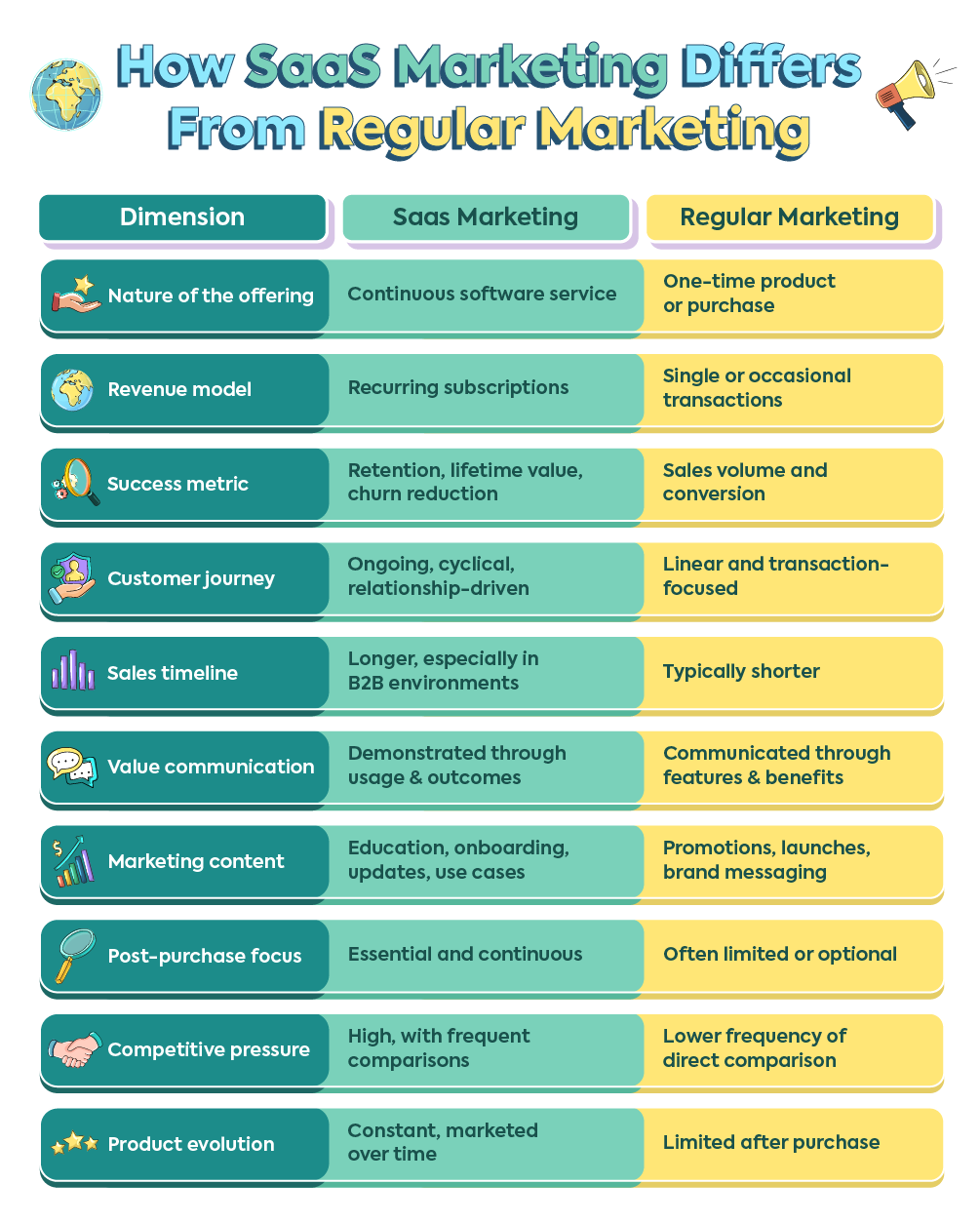
Traditional marketing aims to close a sale. SaaS marketing aims to build a lasting relationship. The difference lies in continuity. Customers must repeatedly justify their subscription through real, ongoing value.

Since the focus is on promoting subscription-based software by guiding prospects from initial awareness through long-term adoption and retention, the process may differ significantly from an average marketing strategy.
SaaS products are intangible and represent an ongoing commitment rather than a one-time purchase; marketing must continuously demonstrate value at every stage of the customer lifecycle.
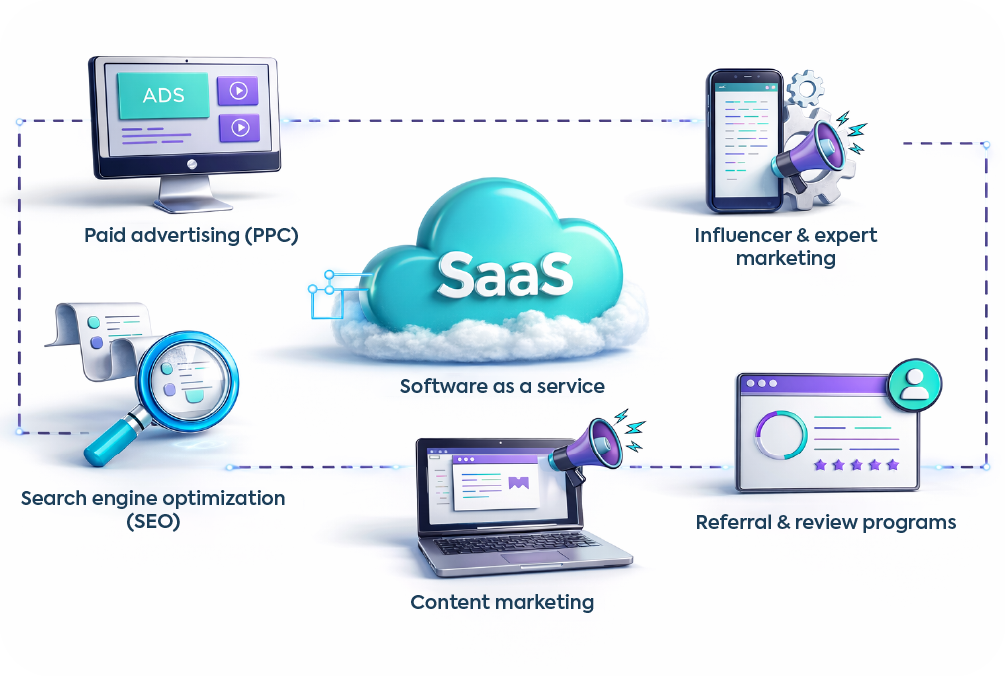
Successful SaaS marketing combines acquisition, education, conversion, and retention into a unified, integrated strategy.

Companies that prioritize SEO are 13x more likely to see positive ROI, according to HubSpot
SEO plays a central role in SaaS growth by capturing demand from users actively searching for solutions. Unlike traditional SEO, SaaS SEO must align content with intent across multiple stages: problem discovery, solution comparison, and purchase readiness.
High-performing SaaS SEO strategies focus on:
- Targeting keywords tied to real pain points
- Publishing in-depth, helpful content
- Maintaining fast, mobile-optimized websites
- Building authority through internal and external links

B2B buyers consume an average of 13 pieces of content before making a purchase decision (Demand Gen Report).
Content is the foundation of SaaS marketing. It educates potential customers, builds trust, and reduces friction throughout long buying cycles.
Effective SaaS content includes:
- Blogs and guides addressing specific problems
- Use-case content and comparison pages
- Templates, calculators, and interactive tools
- Email newsletters and lifecycle content
Rather than focusing on volume, SaaS content succeeds by being deeply relevant and reusable. High-performing teams often repurpose long-form content into social posts, visuals, or email sequences.

Retargeting significantly boosts conversions for SaaS by re-engaging the 98% of visitors who don’t buy initially, making them up to 70% more likely to convert due to increased familiarity and personalized reminders, which is crucial for long SaaS sales cycles where multiple touchpoints are needed.
Paid media helps SaaS companies accelerate visibility while organic channels mature. PPC is most effective when tightly targeted and aligned with intent.
Common SaaS PPC platforms include:
- Google Search for high-intent keywords
- LinkedIn for B2B targeting
- Retargeting ads to re-engage trial users
Often, acquisition costs can rise quickly. SaaS marketers rely on constant testing, clear landing pages, and strong calls to action to protect ROI in such cases.

Referred customers have a 37% higher retention rate than non-referred customers (Deloitte).
Referrals are particularly powerful in SaaS because they rely on existing customer trust. Incentivized referral programs encourage users to advocate for the product while reducing acquisition costs.
Strong SaaS referral strategies:
- Reward both the referrer and the new user
- Keep the referral process frictionless
- Encourage reviews and testimonials

61% of B2B buyers say they trust recommendations from industry experts and thought leaders more than brand-produced content
Edelman, Trust Barometer – B2B Special Report
In SaaS, influence comes from credibility rather than popularity. Industry experts, practitioners, and niche creators often outperform mass influencers.
This channel works best when:
- Influencers are trusted domain experts
- Messaging focuses on real use cases
- Content addresses buyer objections
Micro-influencers and community leaders are especially effective in B2B SaaS, where trust outweighs reach.

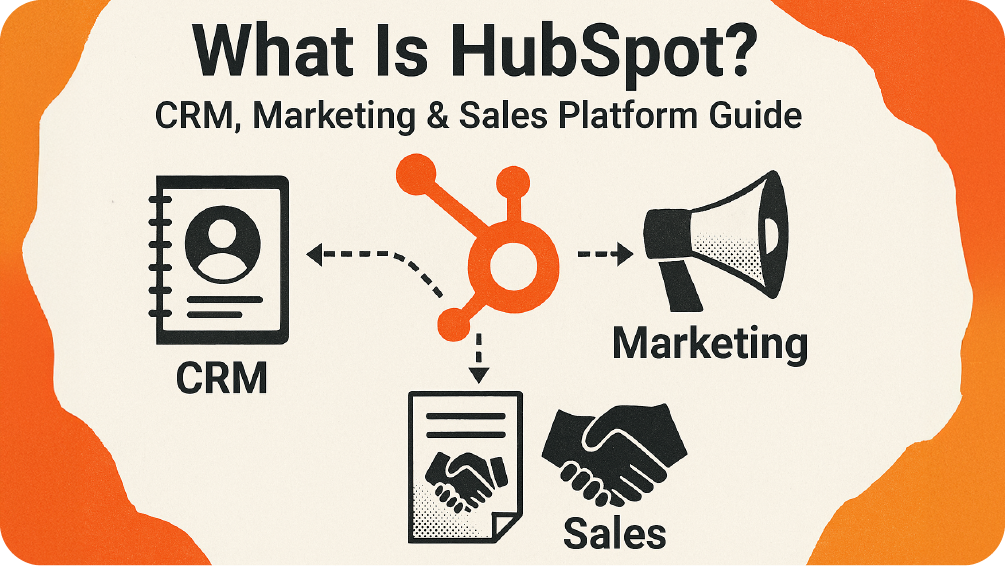
HubSpot is a widely cited example of effective SaaS marketing built around education and inbound growth.
What HubSpot Did
- Invested heavily in SEO-driven content addressing marketing and sales pain points
- Created free tools, templates, and certifications to build trust
- Used gated content to nurture leads through long sales cycles
- Focused on onboarding and product education to improve retention
Results
- Became one of the most visited SaaS blogs globally
- Built a self-sustaining lead engine through organic search
- Turned educational content into a competitive advantage
HubSpot’s success shows that SaaS marketing works best when value is delivered before the sale and reinforced long after conversion.

Optimizing a SaaS Marketing Strategy begins with understanding the unique dynamics of the product. It relies on recurring revenue, long-term customer relationships, and the ability to demonstrate value quickly.
Successful marketing strategies not only attract new users but also nurture engagement, build trust, and drive conversions throughout the customer lifecycle. By aligning messaging, channels, and offers with buyer needs and behavior, SaaS companies can maximize adoption, retention, and growth.

SaaS marketing starts with clarity around who the product is for. Defining ideal customer profiles (ICPs) and buyer personas helps ensure marketing efforts attract qualified users rather than vanity traffic.
Retention data from existing customers is often the most valuable input for refining targeting.

As SaaS buyers face risk when committing to subscriptions, authority matters. Educational content, transparent comparisons, and well-documented case studies help reduce perceived risk.
Brands that consistently publish expert-level content are more likely to earn backlinks, organic traffic, and long-term trust.

Even in B2B SaaS, decisions are made by individuals. Messaging should remain human, clear, and benefit-driven rather than technical or feature-heavy.
Personalization, through email, ads, or onboarding, significantly improves engagement and conversion.

SaaS buyers interact with brands across multiple touchpoints. Effective strategies deliver the right content in the right channel at the right time, from social discovery to product demos.

Pricing tiers, free trials, and freemium models reduce adoption friction and allow users to experience value before committing.
“Over 70% of SaaS companies offer free trials. Studies show that trial users who receive structured onboarding, tutorials, or educational support are significantly more likely to convert to paid customers.” – https://www.totango.com/resources

Iris is your creative team on demand. With the right tools and an in-depth understanding of SaaS marketing, we can design a strategy that gives you the leverage you need for consistent growth.


What makes SaaS marketing different from traditional marketing
SaaS marketing focuses on building long-term customer relationships, not just one-time sales. It emphasizes retention, education, and providing ongoing value, while traditional marketing often centers on transactions.
Which marketing channels work best for SaaS companies?
SEO, content marketing, PPC, referrals, reviews, and influencer/expert marketing are key. Each supports acquisition, conversion, and retention across the customer lifecycle.
How do free trials and freemium models help SaaS growth?
They reduce adoption friction, let users experience value before paying, and improve conversion rates when combined with structured onboarding and educational content.
Why is content marketing crucial for SaaS?
B2B buyers consume multiple content pieces before buying. Blogs, guides, templates, and interactive tools educate prospects, build trust, and nurture leads through long sales cycles.
How can Iris help my SaaS company grow?
Iris acts as your on-demand creative team, turning complex SaaS offerings into clear, engaging marketing that attracts, educates, and retains customers, without the cost or overhead of a full in-house team.
By focusing on understanding your audience, building authority, personalizing messaging, aligning channels to buyer behavior, and providing flexible pricing/trials to drive adoption and retention, we create a SaaS marketing strategy that adapts with your growth over time.