1898 – that’s when the sales funnel was first introduced. Its relevance may be debatable but the goal is still the same – “selling”. In 2025 it’s more about conversions (who clicks “buy now” or “checks out”) than selling a product face-to-face.
Doing a podcast? It’s about how many people are tuning in!
Selling an experience like candle-making or meditation? It’s about how many attendees are showing up
Running a grocery store? It’s about how many customers are checking out.

No matter what the nature of the business, the goal is to sell and ultimately generate ROI. While sales no longer rely completely on a salesman, physical visits to the store or print media advertisements, it still follows the same principles it did back in 1898.
 Source
What has changed over the years is the possibility of optimization.
In simpler terms, it’s adapting to the environment you are operating in.
For an Ecommerce businesses and corresponding industries the Hankins Hexagon makes more sense – for a street vendor, relying on the basic AIDA model may be the key to a favourable result; either way the path to success is through optimization.
Source
To put things into perspective, the consumer journey may be different for each industry. The digital realm positions the sales funnel as a roller coaster that can be manoeuvred by the buyer.
For instance, buying something as simple as bread can be a very calculated decision.
Let us explain:
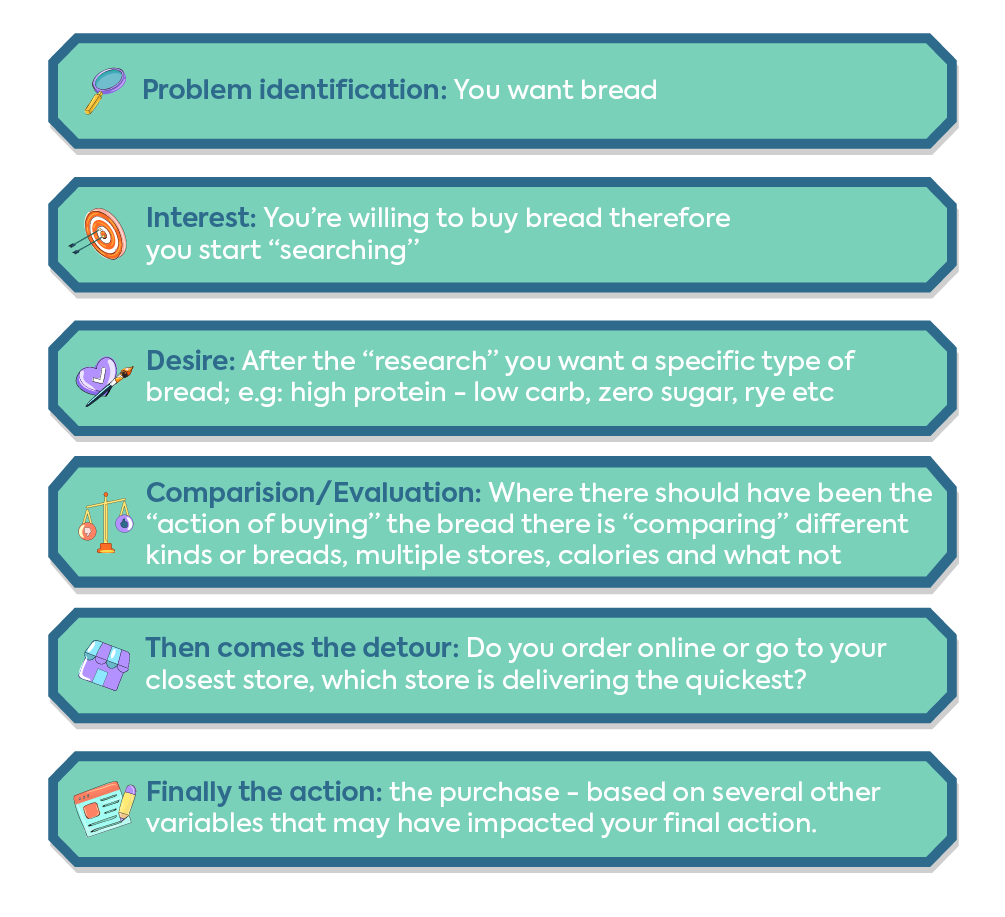
While all simple purchases may not be as complicated as this example, the variables affecting consumer response to any product or service have certainly changed.
Therefore the question arises:

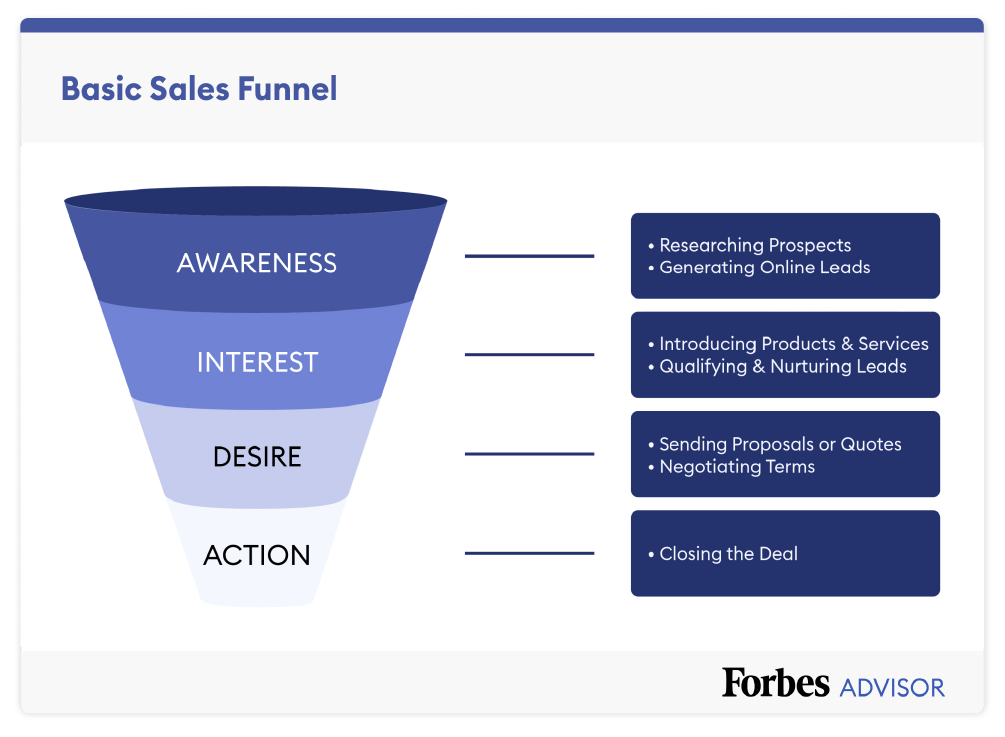
The original sales funnel depicts the consumers journey from the moment they become aware of the product, to building interest which leads to desire and then buying it. However, it’s not as simple as that.
For a brand trying to sell, there is a lot more to consider than just “their side of the story”. This means focusing on the journey of “those who might buy”.
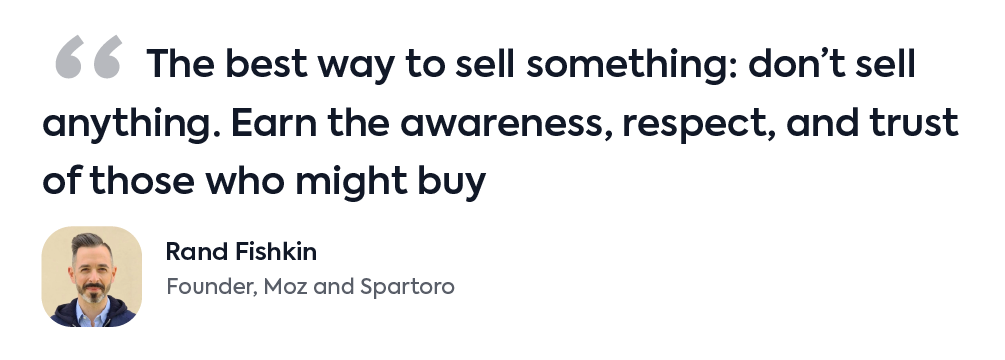
In short, it is far more necessary to understand the buyer’s journey to optimize your sales funnel than to stick to what’s relevant to you as a seller.
This means that the sales funnel of today would look something like this:
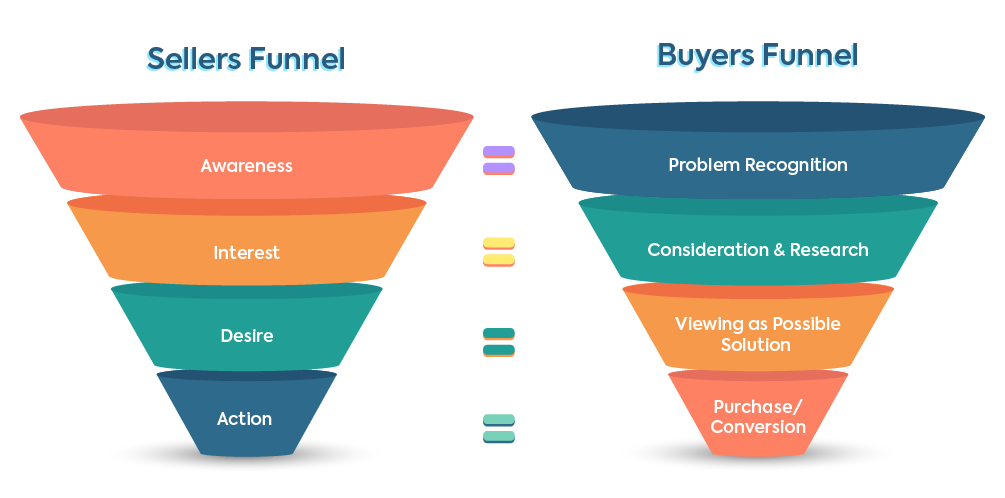
But is this the final version of the process? No. Why? Because a multitude of touchpoints interact with both the buyer and the seller dictating whether there will be an “action” i.e; purchase or not.
Seems like a conundrum doesn’t it? Fortunately there’s a way out.

Ever heard of “merging the journey” of course not, we’ve just coined it! This means merging the buyer and seller’s journey to find the middle ground where awareness is fine tuned to the emotional triggers of the prospective buyer.
Here interest means that the customer may look for alternatives, desire means that your product should be positioned in a way that it makes sense to your particular ICP (more than competitors) and the action is as simple as a quick click on “buy now” or an offer they cannot refuse.
In short, the solution is more strategic, based on intentional action on the sellers part rather than a straight forward path to selling.

For a business to make headway in 2025 it is crucial to understand that the sellers or the buyers journey is no longer linear. Its data driven, relies on customization and is a by product of economic factors (intentional spending).
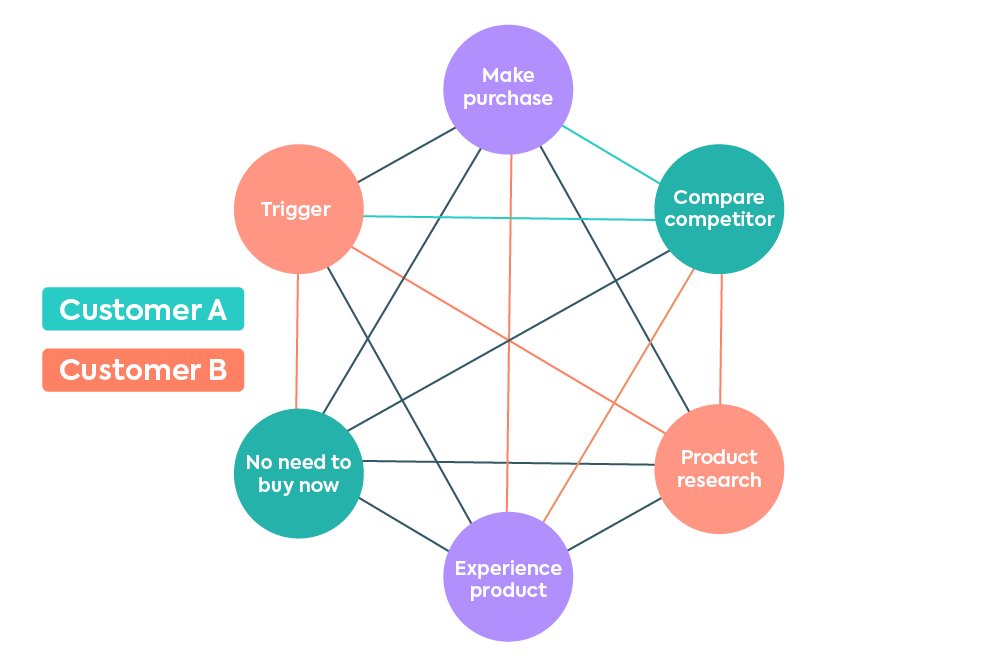
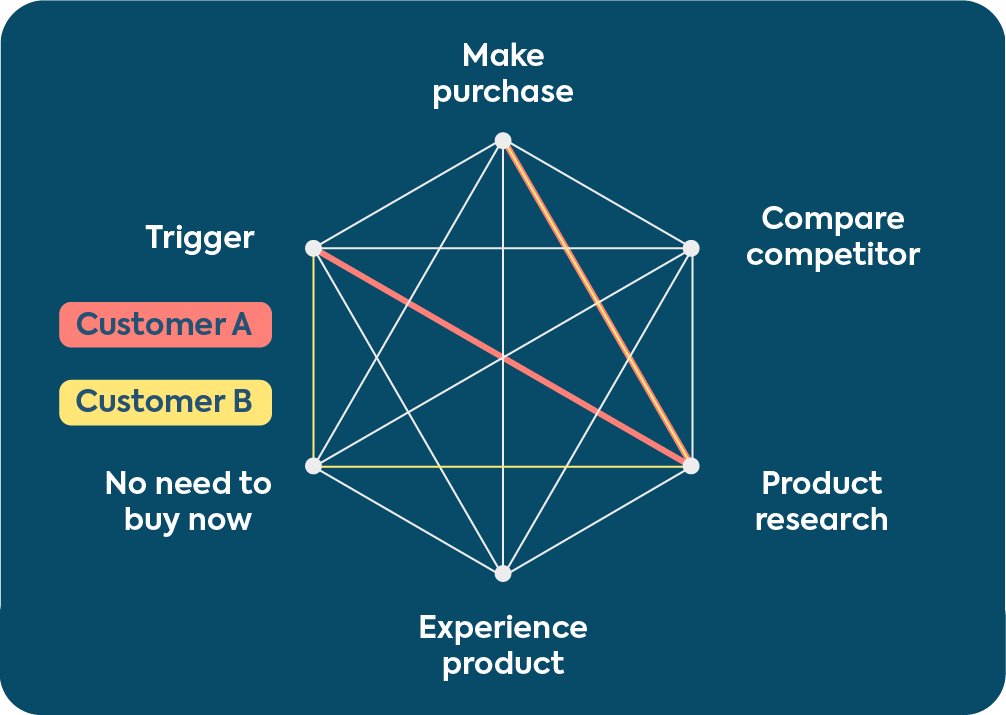
Therefore, the Hankins Hexagon makes the most sense in this day and age.
Source
 Source
Here’s how you can look at it. While customer A may move from the trigger to product research, make a purchase and experience the product, Customer B may not take up the same path.
In some cases, a customer may even move back and forth between two actionable points and abandon the idea of the purchase entirely.

Building your sales conversion funnel is only the first step. The real impact comes when you optimize it. By tracking behavior, removing friction, personalizing engagement, and leveraging the right tools, you can transform your funnel into a powerful engine for growth. This guide walks you through practical steps to analyze, refine, and improve your sales funnel performance.

Optimization begins with data. By tracking how users interact with your funnel, you can identify weak spots and opportunities.
What to measure?
Bounce rates, click-through rates (CTR), and time on page.
Drop-offs at each funnel stage.
User flow across your site.
Tools to use:
Google Tag Manager (GTM): Deploy and manage tracking tags for actions like form fills, clicks, and page visits.
Facebook Pixel: Track conversions, retarget lost visitors, and optimize Facebook ad performance.
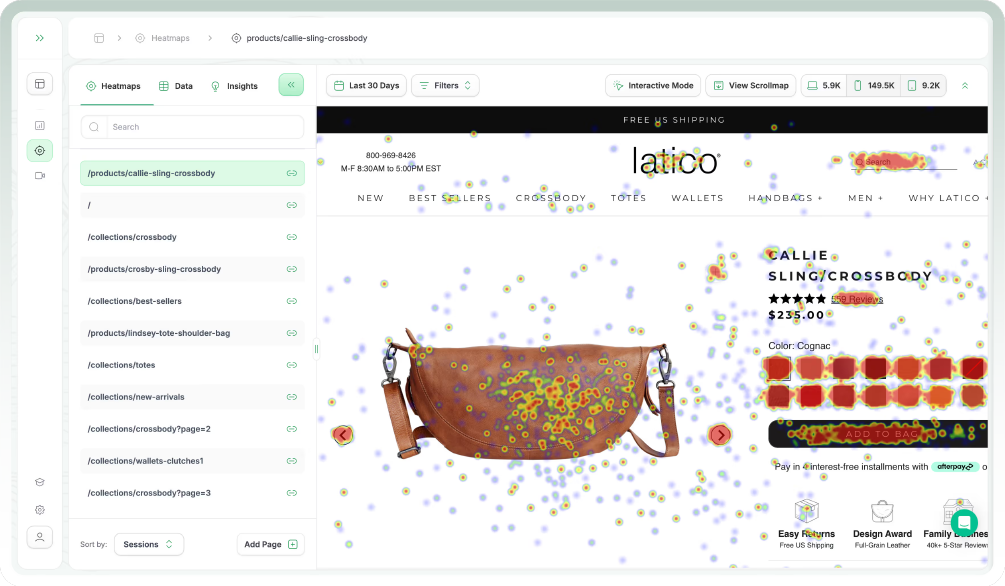
Heatmaps (Hotjar, Crazy Egg): See where users click, scroll, and hover to identify ignored or confusing sections.
Google Analytics 4 (GA4): Analyze user journeys, find high-exit pages, and optimize customer flow.

Once you have data, dig into where prospects drop off and why.
Source
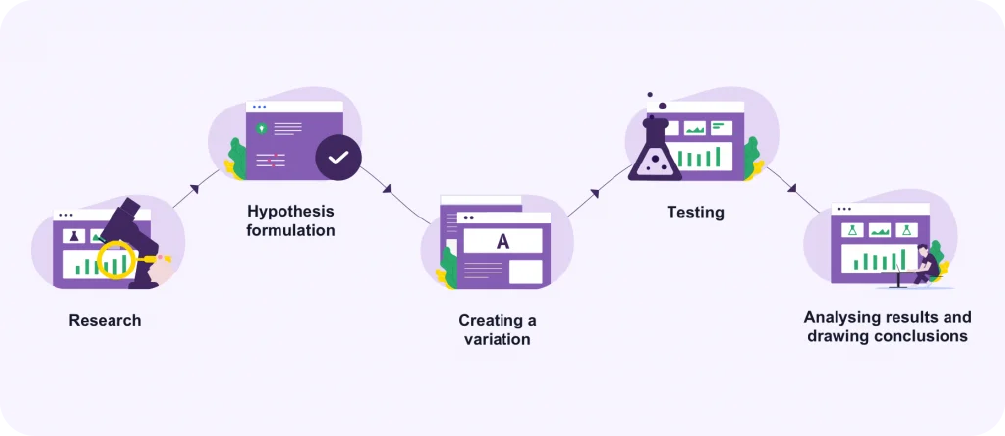
Test variations of headlines, CTAs, designs, or checkout flows. Optimize each funnel stage from landing pages to emails. Base decisions on data rather than assumptions.
User Feedback
Run surveys to uncover prospect needs and frustrations. Conduct interviews for deeper insights into hesitations such as pricing concerns, unclear benefits, or lack of trust. Use findings to refine messaging, offers, and onboarding.
Even backend upgrades, such as migrating from MySQL to PostgreSQL, can enhance performance and reduce friction.

Your funnel does not end with a click. Prospects need to feel heard.
Use a professional email: A business address (for example, [email protected]) builds credibility and trust.
Respond within 24 hours: Timely replies keep momentum, reduce drop-offs, and signal reliability.
Offer multiple touchpoints: Chatbots, contact forms, and direct support create an open line of communication.

Not every lead converts immediately. Stay in front of them with retargeting and personalization.
Retargeting Campaigns
Use Facebook Ads and Google Ads to re-engage users who visited your site but did not convert. Serve dynamic ads tailored to user behavior, such as abandoned cart reminders.
Email Personalization
Segment leads based on behavior like opens, clicks, or downloads. Use dynamic content such as name, product viewed, or personalized offers. Tools like Mail Mint, Mailchimp, or ActiveCampaign make automation seamless.

The right tech stack makes optimization scalable and effective.
Core Setup
Platform: WordPress for flexibility, scalability, and cost-effectiveness.
Hosting: Hostinger for affordability, Kinsta for premium speed, or SiteGround for balanced performance.
Theme: Kadence, Astra, or GeneratePress for fast, conversion-focused design.
Builders and Automation
Page Builders: Elementor, Bricks, or Divi for drag-and-drop simplicity.
Funnel Builder: WPFunnels for visual mapping, upsells, and analytics.
Email Automation: Mail Mint for segmentation, drip campaigns, and follow-ups.
Engagement and Growth Tools
Community: Facebook Groups, either niche, industry-related, or VIP.
Retargeting: AdRoll to manage multi-platform retargeting.
Meetings: Zoom for consultations, demos, and client calls.
Analytics and Reporting: Google Analytics, MonsterInsights, and WPFunnels built-in tracking.
Heatmaps: Hotjar or Crazy Egg for visual user behavior.
Source
Jim Mullen accurately captures the enduring value of a brand. However, the strategic purpose of branding extends beyond mere ownership; it is fundamentally embedded in a promise that a company makes to its customer. This promise is the core expectation that customers buy into, and its fulfillment translates directly into intangible value on the balance sheet, ultimately driving tangible growth and market share.
- A/B Testing: WPFunnels to test funnel pages and offers.

Funnels “leak” when prospects drop off unnecessarily. Common causes include weak value proposition, confusing messaging, poor follow-ups, slow response times, and clunky onboarding.
Fix it by running A/B tests on ads, CTAs, emails, and landing pages. Re-evaluate your value proposition and ensure it is clear and differentiated. Automate follow-ups with workflows using tools like Close CRM or Mail Mint. Improve onboarding support for trial or first-time users. Keep your CRM organized with accurate data for personalization.

Optimization is not a one-time task. Review your funnel quarterly. Check conversion rates at every stage. Experiment with content, offers, and CTAs. Track ROI with analytics tools. Refine based on customer feedback and performance data.

Source
Awareness: Nike builds global brand recognition through iconic campaigns, such as “Just Do It”, sponsorships of athletes, and high-visibility ads during major sporting events such as the Super Bowl. This ensures Nike stays top-of-mind for sportswear and lifestyle buyers.
Interest: Potential customers are drawn deeper through engagint digital content. Social media posts, fitness inspirations, and athlete storytelling spark curiosity about Nike’s products and values.
Evaluation: At this stage, prospects compare Nike with competitors like Adidas or Puma. Nike strengthens its position by offering product reviews, comparison tools on its website, and showcasing innovations like Flyknit and Air technology.
Trial: Nike reduces barriers to trial through limited-time offers, first purchase discounts via the Nike app, and product experiences such as in-store try-ones or virtual sneaker previews. The Nike Run club app also acts as a soft trial, letting users experience the band ecosystem before purchase.
Adoption: The seamless purchase experience – through the Nike app, SNKRS drops, or retail stores – encourages adoption. Fast delivery, multiple payment options, and smooth checkout ensure customers convert from trial to ownership.
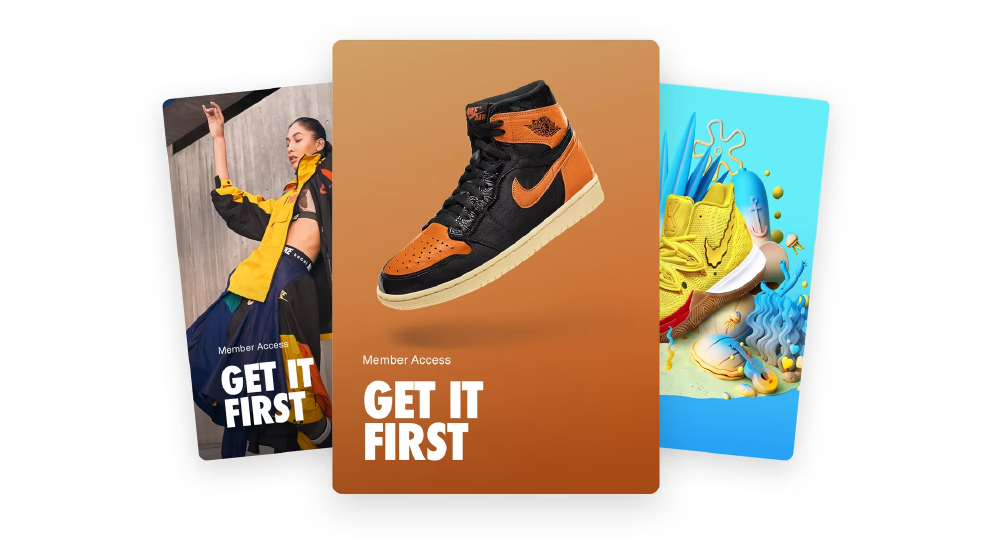
- Loyalty: Nike cultivates long-term loyalty through its Nike Membership Program, offering exclusive access, personalized product recommendations, and early drops. Continuous engagement via fitness apps, events, and athlete-driven communities encourages repeat purchases and advocacy.
Result
Nike moves customers from broad awareness to deep brand loyalty. The funnel works because it integrates emotional branding, digital engagement, exclusivity, and seamless adoption, turning buyers into long-term brand advocates.

Create value, build trust and get our team of creatives on board! Talk to our experts at IRIS and let’s create a funnel that adapts, grows and adjusts with the changing dynamics of your target market!