
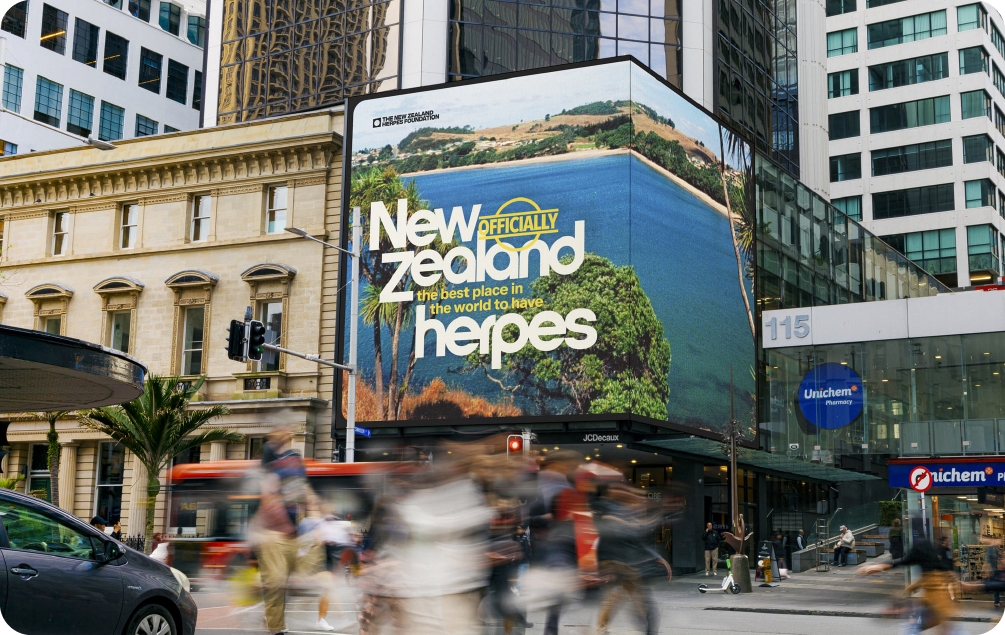
There are but only a handful of intentional marketing campaigns that have managed to leave a mark. The one run by the New Zealand Herpes Foundation for Global Herpes Awareness Day (13 October 2024) is a hallmark in creative marketing.
It had all the right ingredients for a viral and action oriented marketing extravaganza. If people weren’t ready to fly to New Zealand to deal with their herpes, they were at least talking about it.
So much so that this landed the foundation a Lions Health Grand Prix for Good and the Grand Prix for Good for its Make New Zealand the Best Place in the World to Have Herpes campaign.
Impressive isn’t it? Associating herpes with national pride and doing it so well that it lands you a literal award.
“To fix our national pride, the solution is obvious: herpes.”
This is, word-for-word the pitch that New Zealand Herpes Foundation (NZHF) made. Their goal was to raise awareness regarding the infection, tell the world that it should not be stigmatised and that New Zealand was the go-to place in case you were suffering from it.


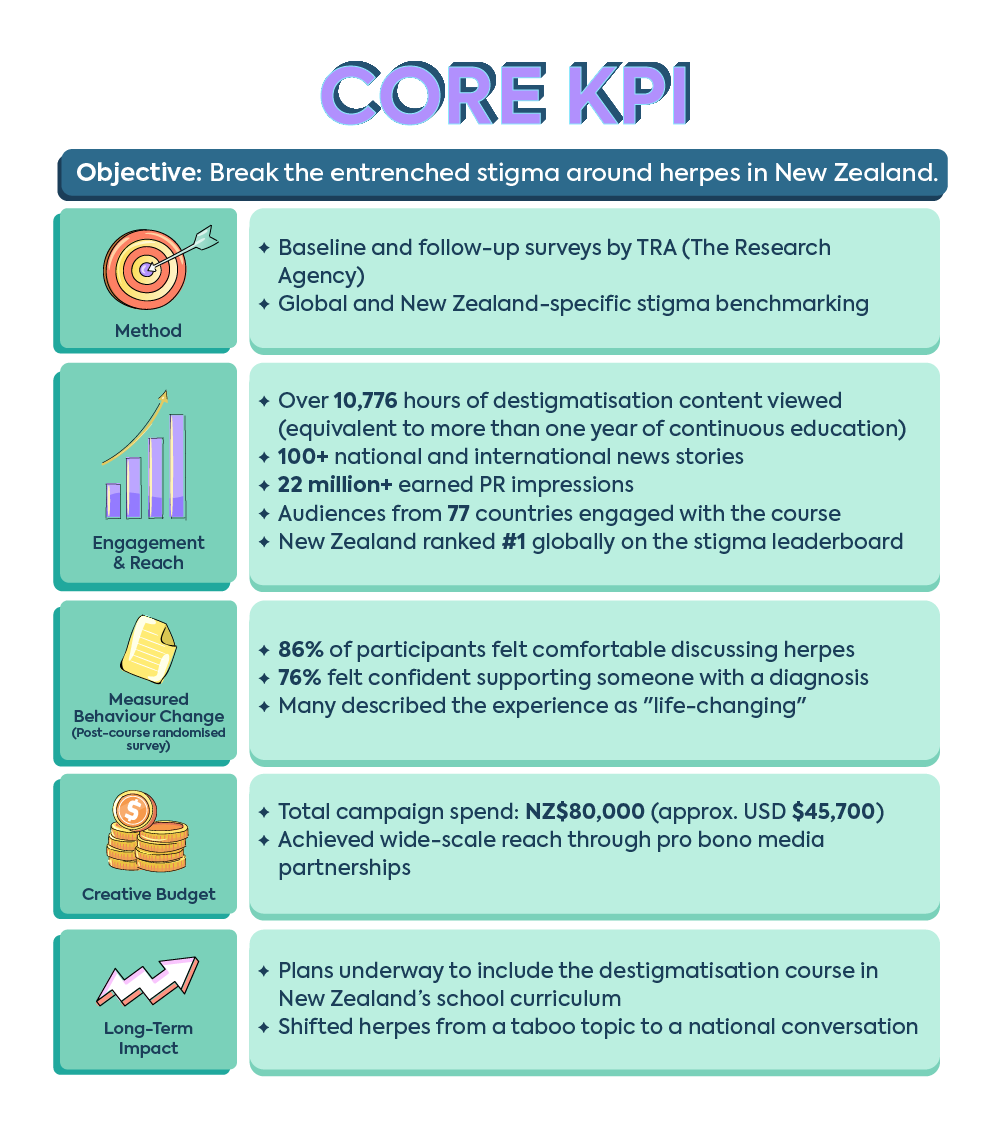
It’s (genius) but more expressive. Because “WOW”, to think so profoundly outside the box is rare. This followed by a response that took New Zealand from the 9th place to the 1st place on the Herpes Stigma Index that too on the live leaderboard for all to see.

From a marketers perspective there are more than a few elements that impact how the audience receives a message. It’s never just about the visuals, or the spokesperson, or the budget – it’s always a creative collaboration of:
- Marketing Genius
- Design Maestros
- Avid Researchers
Nothing can generate a response as magnanimous as this campaign without fulfilling a purpose. To put it simply, the NZHF recognised the stigma associated with the Herpes infection; New Zealand as a destination probably needed more visitors and the target audience needed to complete a “herpes destigmatisation course.”
Yes, you read that. The goal was awareness, regarding the illness, and New Zealand as an ally to those suffering from it.

If there is one ad you absolutely must watch as a creative manager or a marketer it’s this. Beautiful cinematography, exemplary writing, relatable figures and of course the final touch “humour”.

Clicking on the “AD” takes you to a tourism style video. You see former All Blacks coach Sir Graham Henry, disappointed, furious and absolutely losing it over the fact that New Zealand has lost its “AURA” (Yes – everything is about aura).
From New Zealand’s “embarrassing sheep to human ratio” and pies “pushing seven bucks”, everything the country considered a source of pride was going downhill.
And then in a firm tone, Sir Graham announces that the new source of pride would be “HERPES”.
Not what you’d expect? Isn’t it?

A Creative Agency Actually Turned the Tide
The herpes awareness campaign was two decades in the making. Traditional education, clinical protocols and awareness building were all used to get the point across. However, the response was worse than meek.
Enter, Motion Sickness – a New Zealand-based creative agency known for bold, culturally sharp campaigns that challenge convention. Founded by Sam Stuchbury, the agency is known for blending humour, strategy, and storytelling to spark conversation and drive impact.
These creative experts did their magic and everyone agreed.
“Our 2025 awardee took a taboo topic and turned it on its head – showing that with a great strategy, a big, bold, crazy idea … and humour for days, that anything is possible.”
said David Ohana, communications chief at the United Nations Foundation and a jury president at Cannes Lions that year.
For creatives worldwide and anyone who enjoys a good marketing campaign there were lessons to be learnt.

To further understand how they reached the results they did, we must study the entire timeline of the progress.
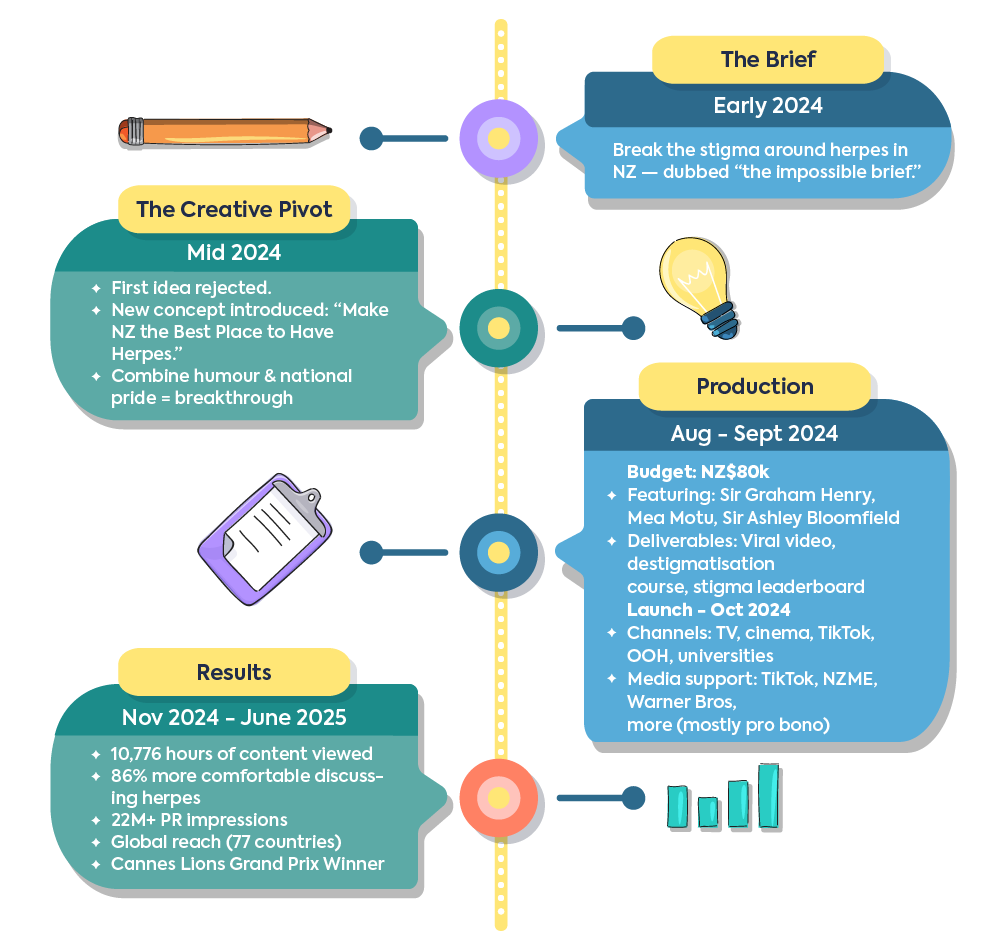

From the doom and gloom narrative, to a good laugh, beloved public figures reiterating the point and a better understanding of the herpes infection – motion sickness managed to create a marketing case study that will go down in history.
“We used humour as a Trojan horse – lowering defences, sparking curiosity, and making it easier to absorb real information.”
Sam Stuchbury, Motion Sickness, about their “Make New Zealand the Best Place in the World to Have Herpes” campaign.

Reframing the Narrative, Redefining the Message
By turning herpes destigmatisation into a national achievement, the campaign transformed a private issue into a public point of pride making it easier to engage with, share, and support.
Using Humour to Make an Uncomfortable Message Palatable
Humour broke through discomfort and stigma, serving as a strategic entry point for real conversation. The joke was never on people, it was on the stigma itself, making the campaign bold, not cruel.
Leverage Cultural Icons for Credibility
Featuring respected Kiwi figures like Sir Graham Henry gave the message instant trust and visibility. Their involvement made it socially acceptable to talk about herpes and helped reframe it as a collective issue, not a personal flaw.
Driving Impact, Not Just Impressions
The campaign went beyond awareness, it measured behaviour change. 86% of participants said they were more comfortable discussing herpes, proving that smart creative can lead to lasting social shifts.

We’re waiting to make it happen for you.
Reach out to our team of creatives at IRIS today and let’s build winning campaigns that drive results for you!