
For businesses making their space in the digital world the amount of information out there is overwhelming.
From how to run ad campaigns to suggestions that designers are obsolete because one software company decided to collaborate with an AI agent, there is so much information out there that it’s easy to fall down a rabbit hole.
This is where solid strategy and thought leadership becomes an asset for a business.
In 2025 it’s rare to see a business thrive offline. This means a business needs design, content, social media management and a full fledged creative team just to get their brand message across to the right audience.
This opens the business to more possibilities than are actually useful.
To stay efficient, you need to filter out processes that increase cost without increasing revenue, and decide what’s better handled internally versus by an external creative service. This removes trial-and-error and keeps things focused.

The benchmarks they set and the practices they follow become an example for peers in the industry and their expertise can be hired by their clients to grow in their respective industries.

In today’s AI-driven, information-heavy market, thought leadership is no longer optional; it’s a strategic advantage for any business that wants trust, visibility, and long-term relevance.
Most buyers no longer choose a company solely based on product features or pricing. They choose the brand they trust, the brand that teaches, and the brand that leads the conversation in the industry.
Working with thought leaders or becoming one can only prove useful for your business, here’s how:

A major study by Edelman & LinkedIn found that:
- 64% of B2B buyers say thought leadership is a better indicator of a company’s competence than marketing materials.
- 51% of decision-makers say it directly influenced their choice to work with a company.
- 63% say it builds credibility for a brand they’ve never heard of.

Companies implementing strong thought leadership see:
- Higher-quality leads
- More inbound inquiries
- Shorter evaluation cycles
- Less price sensitivity
Because your audience already sees you as the authority, the “convincing” part of the sale is halfway done.

Thought leadership content (data-backed insights, frameworks, industry predictions) tends to perform extremely well in search.
Since a strong digital presence is crucial for a business to boost visibility, sales and authenticity, a strong thought leadership strategy can help because:
- Google prefers authoritative, expert-driven content (E-E-A-T).
- High-value insights earn backlinks naturally.
- Thought leadership boosts brand search volume, which is a ranking signal.

When products and services look similar, point of view becomes your competitive advantage.
A strong thought leadership strategy lets you:
- Shape industry narratives
- Influence trends
- Define new standards
- Position your company as a category leader, not just another option
Source: Forrester: “Thought Leadership Creates Competitive Advantage” (2023)

According to the Edelman – LinkedIn study:
- 71% of buyers say thought leadership improves their perception of a company.
- 55% say it leads them to explore a product or service they were not considering.
- 60% say it makes a company seem more capable of solving their business challenges.
In summary, if you’re not incorporating thought leadership, your authority within the industry is bound to depreciate. Thought leadership ensures evolution, growth & consistency for your brand.

Canva’s rise from a simple drag-and-drop editor to one of the world’s most-used design platforms didn’t happen because of traditional advertising or corporate messaging.
Instead, Canva accelerated its growth by collaborating with design educators, creators, and branding thought leaders who helped users understand, trust, and confidently adopt the tool.
These collaborations built an education-driven ecosystem that turned Canva into the default platform for non-designers and small businesses worldwide.
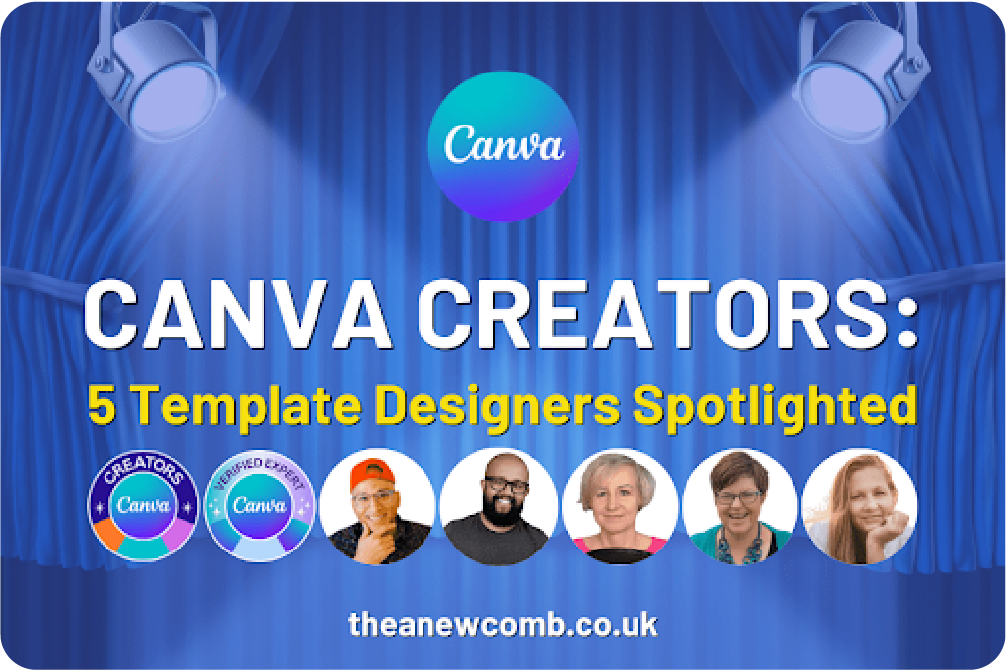

Canva recognized early that design felt intimidating for most people. Rather than trying to solve this barrier through ads, they partnered with experts who already taught design, branding, or productivity.
Educators like Ronny Hermosa, Diana Munoz, and Vanessa Lau became the bridge between Canva and new users. Through tutorials, workshops, and content showcasing real workflows, they transformed Canva from a tool people heard about into a tool people felt confident using.

Templates are one of Canva’s most powerful growth levers, and many of the most-used templates on the platform were created not by Canva’s in-house team but by independent designers.
Published templates that went viral on Pinterest, Instagram, and YouTube. Each template gave users a quick win, reinforcing Canva as an easy, practical design solution.
This template ecosystem functioned as a content distribution network, every template was another pathway into Canva’s world.

One of Canva’s smartest moves was empowering creators across different countries to teach Canva in their own languages and contexts.
Educators in India, the Philippines, Nigeria, Brazil, and Latin America became regional ambassadors, helping Canva expand in markets where traditional advertising would have been expensive and culturally less effective.
By letting local experts lead adoption, Canva achieved global reach with authentic, community-driven support.

The thought leaders Canva partnered with were not celebrities, they were practitioners. They taught real skills and showed practical workflows for businesses, creators, students, and freelancers.

For example:
- Ronny Hermosa teaches step-by-step design fundamentals
- Diana Munoz shows advanced branding and layout techniques
- Vanessa Lau teaches social media and creator marketing using Canva assets
- Matt Johnston (video expert) teaches how to produce short-form video using Canva’s editing tools
Their audiences trusted them, and that trust transferred directly to Canva.

Although Canva does not release detailed attribution data, multiple public signals confirm the impact of these collaborations:
- Canva’s top educational YouTubers collectively reach millions of learners
- Creator-made templates are used globally across small businesses and social media
- Canva invests heavily in its Creator Marketplace, revenue-sharing programs, and educator certifications
- Many users first discover Canva through tutorials or templates created by these thought leaders
Canva effectively built a distributed education system, powered not by employees but by expert creators who made the platform accessible to anyone.

Canva’s success shows how powerful thought-leader collaboration can be when it aligns with user needs. By partnering with educators, designers, and branding strategists, Canva removed the learning curve that prevents most people from designing confidently.
Thought leaders didn’t just promote Canva, they taught it, simplified it, and embedded it into the daily workflows of millions of users.
For creative agencies and brands seeking sustainable growth, Canva demonstrates a modern truth:


In an era where every brand is producing content, thought leadership is what separates the noise-makers from the industry-shapers.
At Iris Creatives, our thought-leadership-driven approach elevates your brand from simply showing up to leading the conversation.
Whether you’re a scaling startup, a growing enterprise, or an established global brand, we help you build authority, trust, and long-term market influence.

Most businesses struggle not because their product is weak, but because their market doesn’t understand their expertise. We help you uncover and articulate:
- What your brand uniquely knows
- The insights only you can share
- The opinions that position you as an industry authority
Through strategic content, research-backed insights, and narrative frameworks, we transform your expertise into industry leadership.

Customers buy from brands they trust. Thought leadership accelerates this trust by demonstrating:
- Real expertise (not just marketing claims)
- Honest perspectives
- Valuable, educational content
Our team ensures your brand becomes the preferred voice your audience turns to for clarity, answers, and strategic guidance.

Thought leadership isn’t just about churning out generic content, it’s about consistently shaping perception across every touchpoint.
With Iris, your brand gets:
- High-authority blog content
- Executive LinkedIn presence and ghostwriting
- Industry analysis and trend breakdowns
- Social thought-leadership content
- Research-backed reports, playbooks, and guides
This multi-format system ensures your voice stays influential, everywhere your audience shows up.

Brands with strong thought leadership:
- Close deals faster
- Command higher pricing
- Win partnerships more easily
- Become magnets for media, talent, and investors
By consistently publishing expert-driven insights, you position your company not as a vendor but as a strategic partner. That shift alone creates a measurable competitive advantage.

Unlike traditional agencies, Iris provides a full-stack engine that goes from
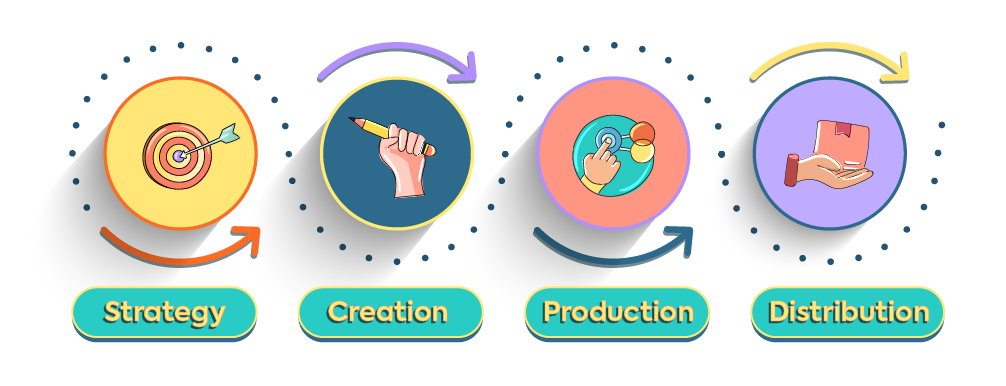
Under our Core and Edge plans, you get:
- A Creative Director-led team
- Strategy-backed content production
- High-quality visuals, motion, and storytelling
- SEO-driven article creation
- Social media leadership content
- Quarterly strategic reviews (Edge Plan)
- Competitor insight and performance analysis
This means you don’t just “publish more”, you publish smarter, with a system designed to elevate authority and drive leads.


Is thought leadership more effective than traditional marketing?
Yes, because buyers increasingly trust experts over advertisements.
A major study found that 64% of B2B buyers consider thought leadership a better indicator of a company’s competence than standard marketing materials.
Additionally, 51% of decision-makers state that expert-led content directly influenced their choice to partner with a company.
How does thought leadership improve sales performance?
Implementing a strong strategy leads to higher-quality leads, more inbound inquiries, and shorter evaluation cycles. It also reduces price sensitivity because the audience already views the brand as a trusted authority, meaning much of the “convincing” is already done before the sale begins.
What is the impact of thought leadership on SEO?
Thought leadership significantly boosts organic visibility because search engines like Google prioritize authoritative, expert-driven content (E-E-A-T). High-value insights naturally earn backlinks and increase brand search volume, both of which are critical ranking signals.
How did Canva use thought leadership to scale?
Canva accelerated its growth by collaborating with design educators and branding thought leaders rather than relying solely on traditional ads.
By empowering local experts to teach the platform in their own languages and contexts, Canva built a global, education-driven ecosystem that made the tool accessible to millions.
Why is thought leadership essential in an AI-driven market?
In today’s information-heavy market, buyers no longer choose brands based on price alone; they choose brands they trust and those that lead industry conversations.
Without incorporating thought leadership, a brand’s authority within its industry is likely to depreciate over time.