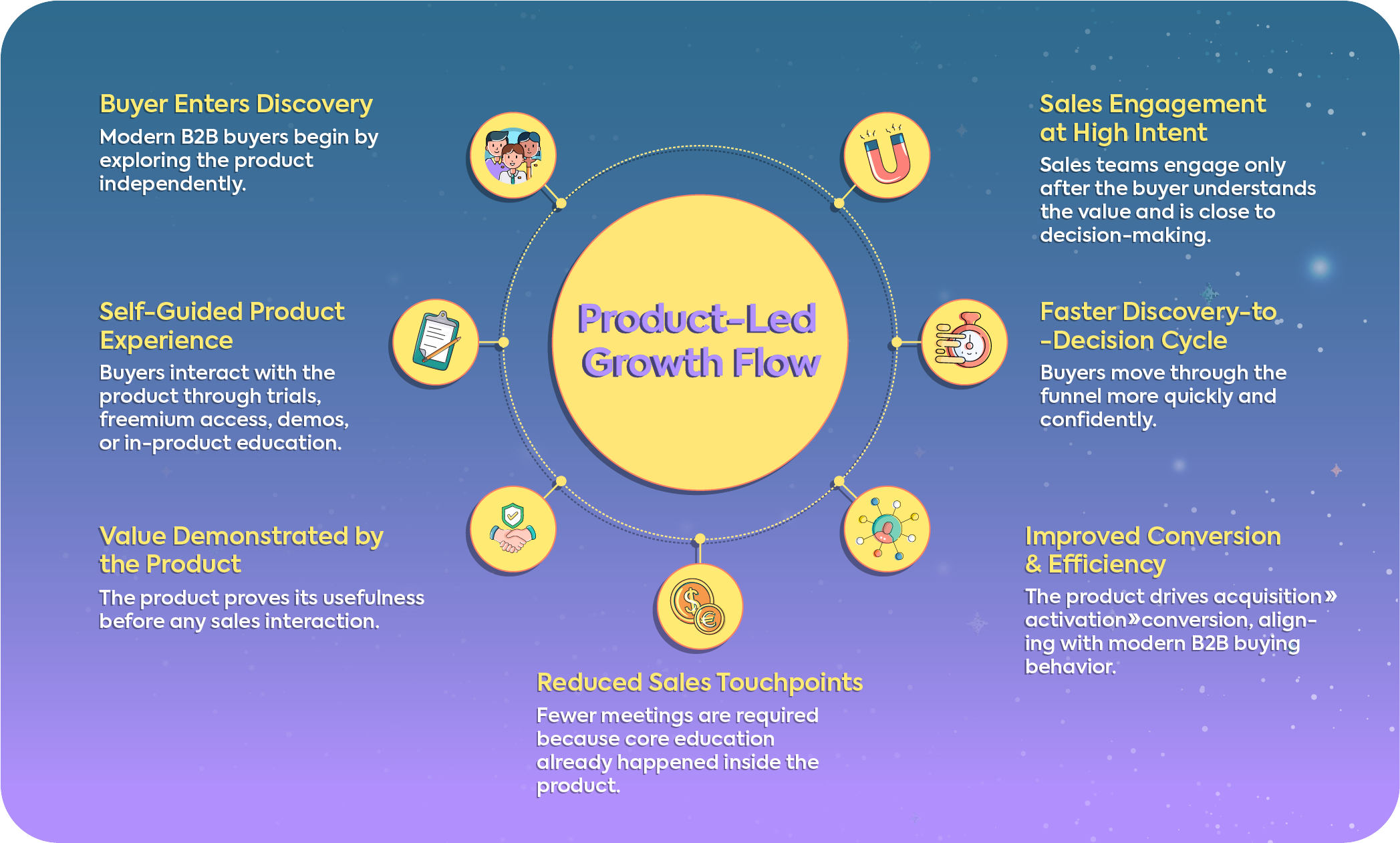
Approximately 71% of B2B buyers want to educate themselves on a product independently instead of being educated by a sales representative, a trend directly related to product-led growth strategies that shorten the standard SaaS sales cycles.
As B2B buyers gain access to more information, they increasingly prefer to educate themselves before engaging with sales. Research shows that around 71% of B2B buyers want to independently research products through documentation, demos, reviews, and hands-on trials rather than being guided by a sales representative early in the journey.
This shift has directly fueled the rise of product-led growth (PLG) strategies in SaaS. When prospects can explore a product on their own, through free trials, freemium models, onboarding flows, and in-product education. They reach clarity and confidence much faster. As a result, sales conversations happen later in the funnel, are more qualified, and focus on validation instead of basic education.
The outcome is a shorter, more efficient sales cycle. Buyers move from discovery to decision with fewer touchpoints, while sales teams engage only when the product has already demonstrated value. In PLG-driven SaaS businesses, the product itself becomes the primary driver of acquisition, activation, and conversion, aligning perfectly with how modern B2B buyers prefer to buy.
Consider a best-qualified lead who enters the pipeline already convinced of your product’s value, not because of months of back-and-forth sales calls, but because they’ve experienced it firsthand. Instead of a six- to nine-month sales cycle driven by repeated education, the conversation starts at validation and fit.
Today’s SaaS buyers don’t just want to be told what your software does; they want to see it in action on their own terms. When prospects are empowered through a strong product education strategy, via trials, demos, onboarding, and in-product guidance, sales cycles shorten, conversion rates improve, and your go-to-market motion becomes significantly more efficient.

Interactive demos, guided tours, self-serve tutorials, in-app instructions, and contextual support materials are viewed as core growth drivers by SaaS companies as opposed to being nice-to-haves.
Unlike conventional sales-based models which have reps guide the prospect through each step, educating buyers sooner allows them to self-qualify, learn value, and make decisions more quickly. This directly influences the length of the sales process. Customers today desire freedom in their purchasing process.
They like to perceive value, and where they can do so with carefully crafted product education experiences, they can drop down the funnel faster, usually weeks or months faster than in cases where sales teams provide just information.
What is Product Education?
Product education is the structured process of helping users understand, adopt, and extract real value from a product, through the product itself, not just through sales or support.
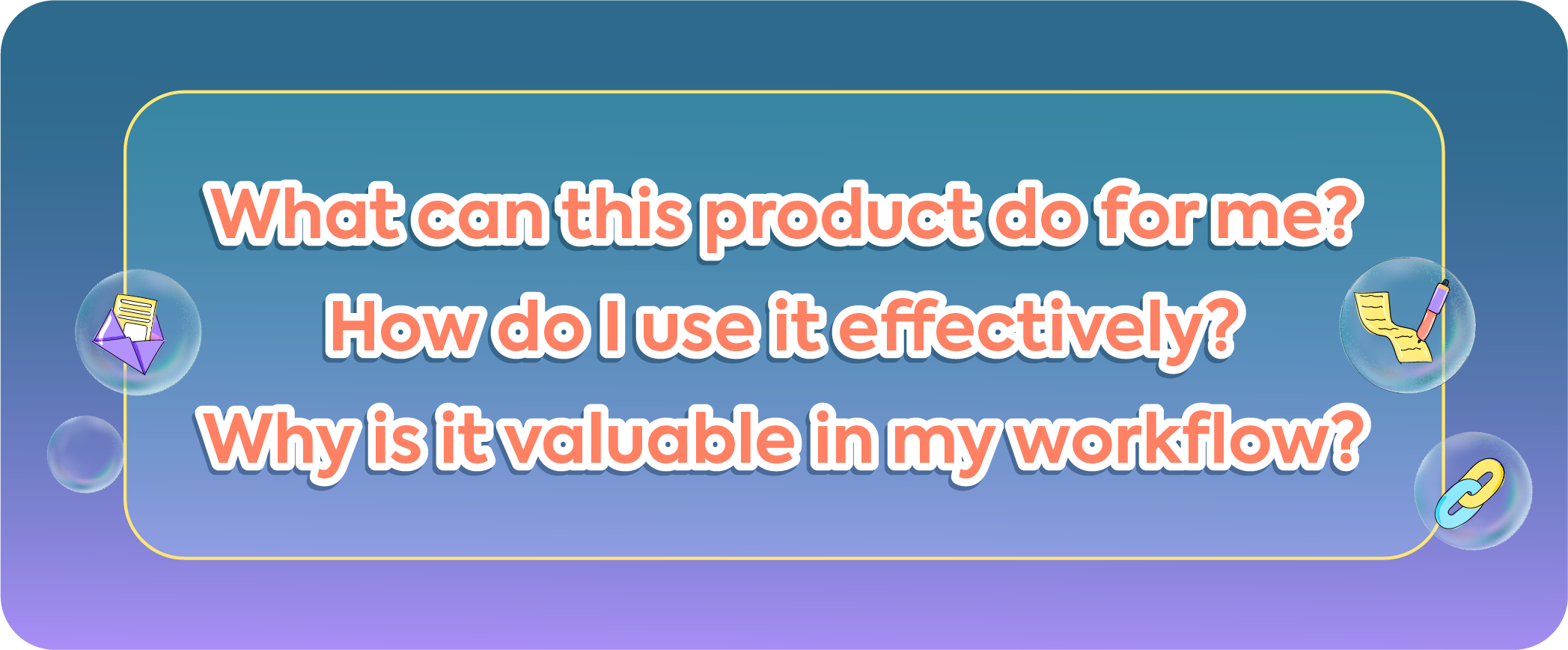
In a modern SaaS context, product education enables users to learn by doing. It includes everything that guides a user from first interaction to meaningful outcomes, such as onboarding flows, in-app walkthroughs, tooltips, tutorials, documentation, use-case examples, and contextual prompts. At its core, product education answers three critical questions for the user:
When done well, product education reduces friction, accelerates time-to-value, lowers dependency on sales and support, and becomes a key driver of product-led growth, aligning directly with how modern B2B buyers prefer to evaluate and adopt software.
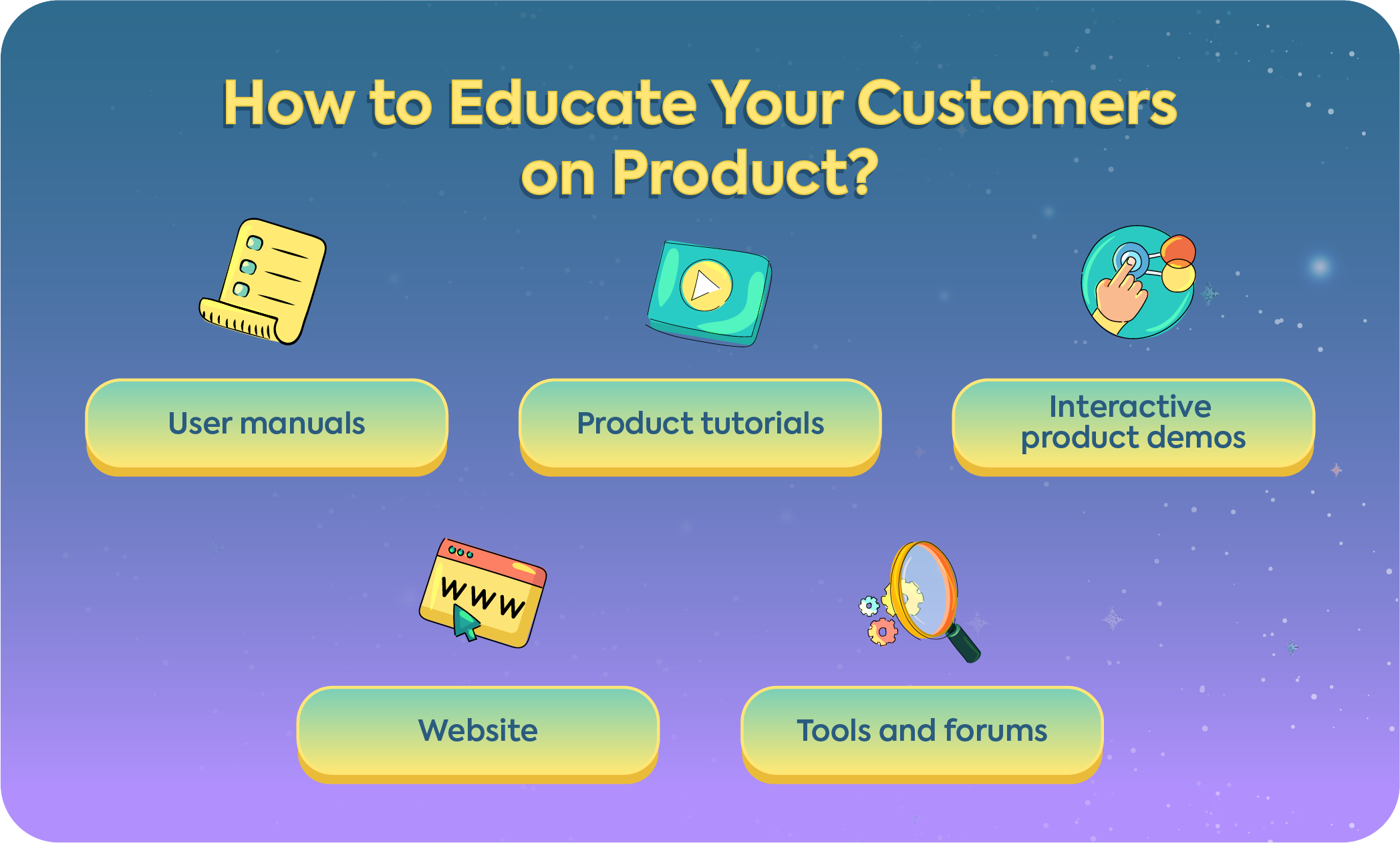
Product Documentation & Knowledge Bases
Prospects can answer their questions without consulting anyone, as clear, searchable documents, frequently asked questions, and user manuals are provided.
Interactive Product Demos
Interactive product demos are short, guided walkthroughs that let users explore key features without a full setup or sales interaction. Through clickable flows or brief videos, users can see how the product works in real use cases, at their own pace.
They reduce friction, speed up understanding, and help users experience value early, making them a powerful tool for product education and product-led growth.
Guided Onboarding Nudges
Tours within the app, which describe the way it works, and allow prospects to get to the aha moment quicker.
Self-Serve Learning Academies
Organized learning paths that enhance product knowledge and demonstrate advanced skills.
Both tools minimise friction as people no longer have to wait until they can get a demo or make a discovery call, and instead, customers can self-educate at their own pace, leading to quick decisions.

Webflow demonstrates how product education can replace traditional sales-led onboarding and accelerate product adoption in a product-led SaaS model.
Instead of relying on one-to-one demos, Webflow invested heavily in Webflow University, a structured learning platform offering video courses, guided tutorials, and in-product walkthroughs. These resources allow users to learn the product independently while actively building real websites.
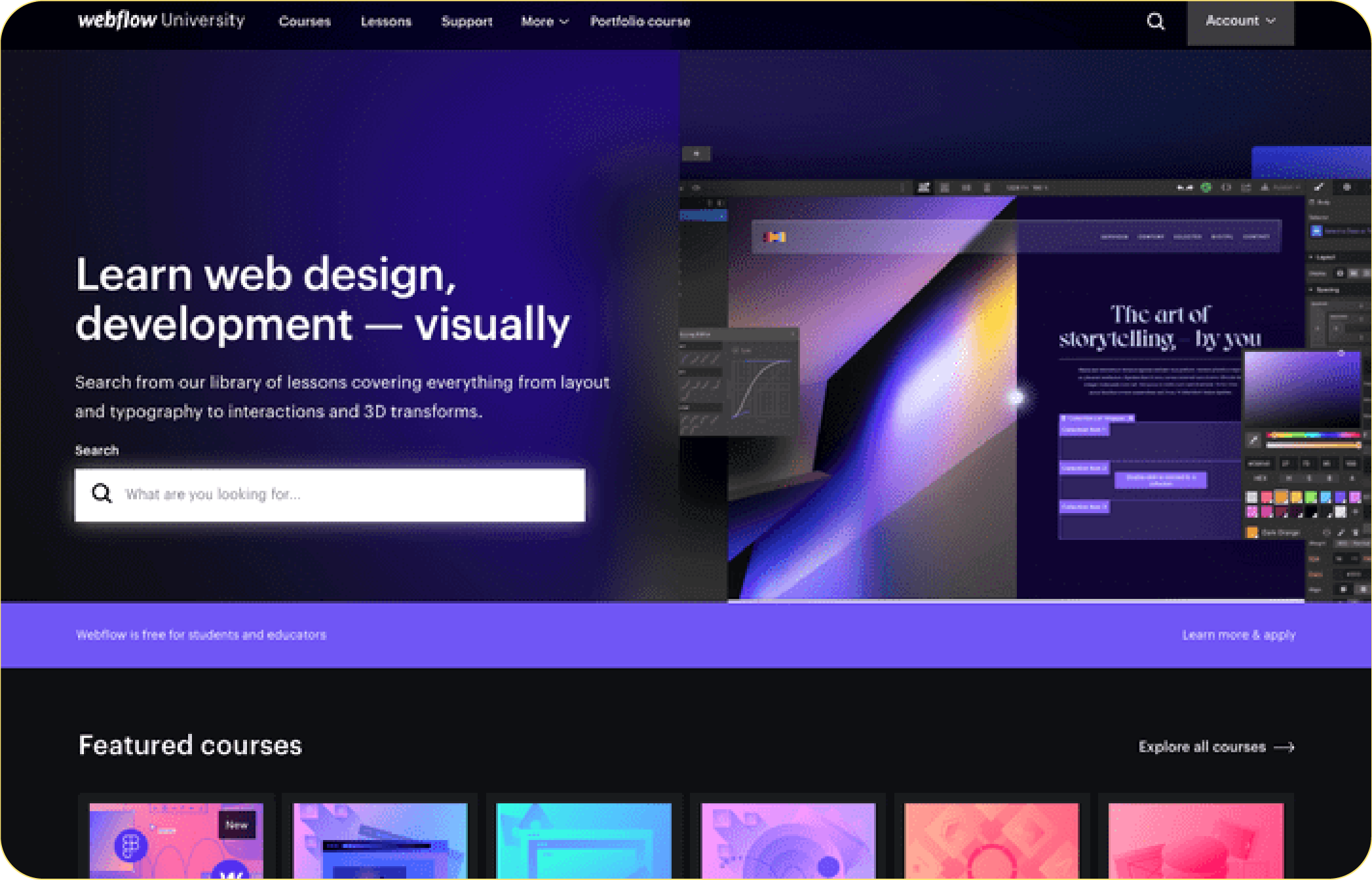
By embedding education into the product experience, Webflow enables users to reach meaningful outcomes early, often publishing a site before ever interacting with sales. This self-serve learning model reduces onboarding friction, shortens time-to-value, and allows sales teams to engage only when users are ready to scale or move to paid plans.
Webflow’s approach aligns directly with modern B2B buying behavior: buyers educate themselves, validate value through hands-on use, and convert once the product has proven its impact.
How to Apply Product Education for SaaS Companies
Ranging from the initial stage of growth and expansion of ARR, here is an explicit playbook for incorporating product education into shifting to shorter sales cycles:

- Map the Buyer’s Journey
Understand when prospects hang or dry up. Provide educational material (videos, FAQs, guided tours) in those areas of friction.
- Build Self-Serve Learning Assets
Launch a learning academy where people can get tutorials on demand, free courses, and product demonstrations. Take advantage of such tools as knowledge bases, micro-learning modules, and interactive guides.
- Implement Guided Onboarding
Make use of in-app tutorials, which assist users to learn how to use the product step by step at the beginning of the trial period. Identify the most important actions that can produce valuable results.
- Track Product Qualified Leads (PQLs)
Monitor significant usage indicators (feature usage, workflow accomplished) and feed them into your CRM. The contacts with such signals experience short sale cycles.
- Align with Sales Enablement
Ensure that your sales team considers product engagement data to personalize conversations. The sales reps are only supposed to target qualified and educated prospects who are more proximate to making a purchase decision.
- Feedback Loop with Product & Support Teams
Rely on support tickets, customer success insights, and product usage data to streamline product education materials, and improved education translates into fewer blockers in the sales funnel.

Shorter sales cycles don’t happen by accident; they are designed. At scale, effective product education requires more than scattered tutorials or documentation. It needs a system that blends strategy, content, experience design, and technology into a cohesive buyer journey.
At IRIS, product education is treated as a growth lever rather than a support function. We help SaaS companies design education ecosystems that live inside the product and across the funnel, combining interactive demos, guided onboarding, self-serve learning hubs, and contextual content that meet users exactly where they are.
By aligning product education with your PLG motion, GTM strategy, and buyer intent signals, IRIS enables teams to:
- Reduce reliance on early-stage sales education
- Accelerate time-to-value for new users
- Surface high-intent, product-qualified leads faster
- Enable sales teams to focus on validation and expansion, not explanation

The result is a buying experience that mirrors how modern B2B customers want to evaluate software: independently, confidently, and at their own pace, while quietly compressing sales cycles and improving conversion efficiency. In a product-led world, education is the product’s voice.

- How exactly does product education speed up sales in SaaS?
Product education allows a prospect to understand how your product delivers value in their terms and eliminates the need to go through the qualification process with sales, allowing the purchase decision to be made faster.
- Can product education replace sales teams entirely?
Not always. In the case of SMBs and mid-market segments, it can significantly reduce the number of sales touchpoints. In sophisticated enterprise purchases, education is used to supplement sales with value creation, and subsequent sales discussions become more fruitful.
- What tools help deliver product education effectively?
Prospects learn more quickly with the help of knowledge bases (e.g., Zendesk Guide), interactive walkthroughs (e.g., Userlane, Pendo), educational courses (e.g., LearnWorlds, Trainual), and in-app messaging/education tools.
- What metrics should SaaS companies track to measure impact?
Important metrics such as time to value (TTV), PQLs to paying conversion rate, trial-to-paid conversion speed, demo request reduction, and overall sales cycle length will be of importance.
Educating the product is not a support strategy only in the contemporary SaaS GTM framework, but a powerful tool.
- How can IRIS help shorten our SaaS sales cycle?
IRIS designs self-serve product education, interactive demos, guided onboarding, and learning hubs for your brand. This lets buyers experience value independently. This accelerates understanding, moves sales conversations to higher intent, and drives faster conversions, making your GTM motion more efficient.