Its 2026, and SaaS is more of a necessity than an add-on. This does not rely on the nature of the business or the industry; it uses SaaS to run and automate operations.
Worldwide SaaS revenue is expected to grow at an annual rate of 19.38% between 2025 and 2029, reaching $793.10 billion by 2029.
These are promising numbers for a rapidly growing market. But this also means an influx of start-ups that chose SaaS as their offering. As such, standing out in the sea of SaaS is a challenge most brands must consider.
In a digital space where cloud systems and world distribution platforms are becoming the norm, building a brand that creates the right kind of engagement, client retention, and growth prospects is a non-negotiable.
One way to cut through the noise is through category-first branding. While businesses have been relying on this methodology for years, this is more of a strategic choice for brands that have chosen SaaS.

Category-first branding (sometimes called category-first thinking) is a strategic approach where a company focuses on shaping and growing an entire category before concentrating on brand preference. Instead of competing aggressively within an existing market, category-first brands work to define how customers understand a problem and position themselves as the most natural solution to it.
This approach reflects how people actually buy. Most purchasing decisions start with a need or situation, not a brand name. Consumers think, “I need a quick energy boost” or “I need a better way to manage work,” long before they think about specific companies. Category-first branding aligns with this behavior by anchoring the brand to those moments of need.
When done well, the result is category leadership or, in some cases, becoming a “category of one.”
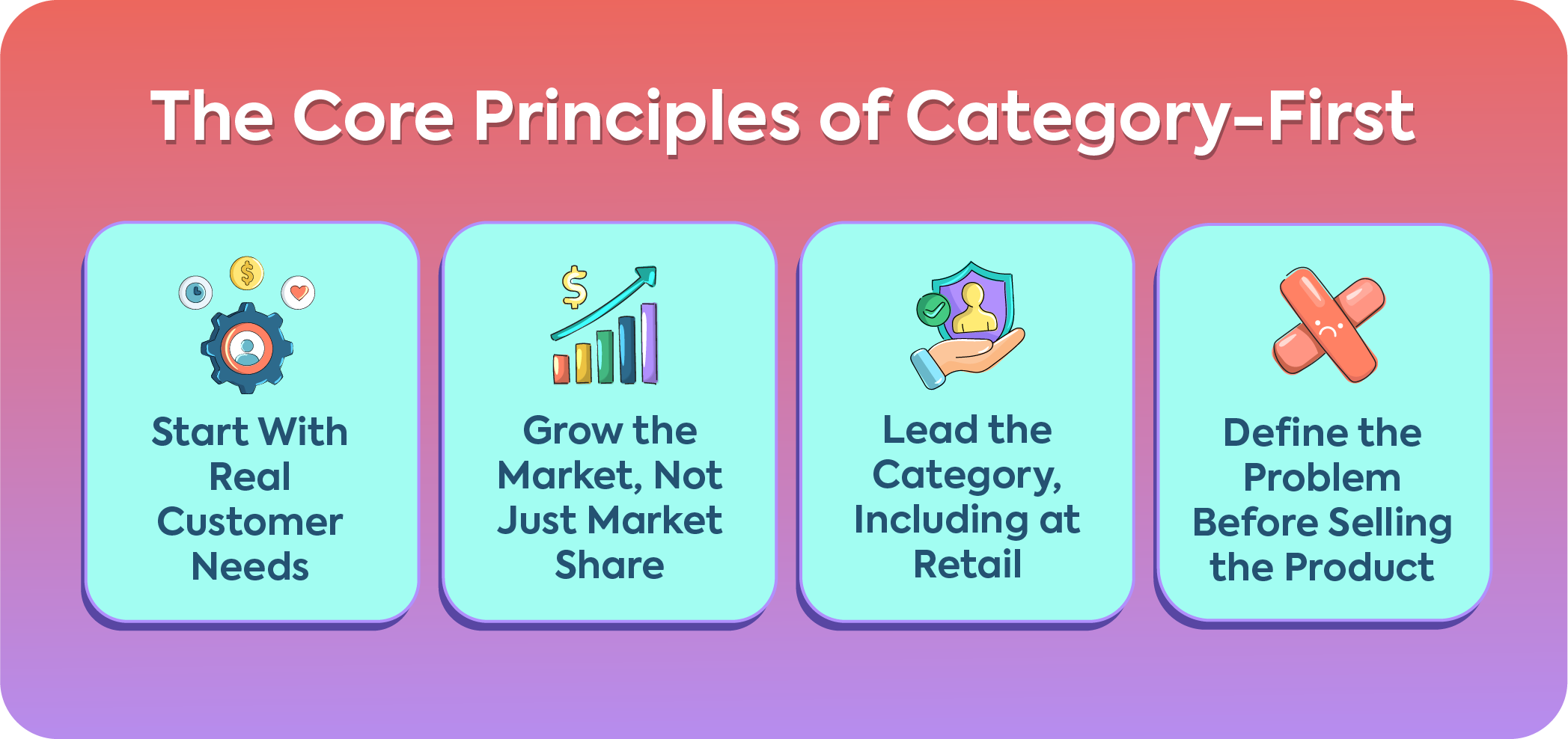
1. Start With Real Customer Needs
Category-first brands focus on the situations that trigger buying decisions, often referred to as Category Entry Points (CEPs). These are the real-life moments, motivations, or problems that cause someone to enter a market in the first place.
For example, “needing a caffeine boost” is a category entry point. “Wanting a specific energy drink brand” usually comes later. Brands that win categories attach themselves to these high-frequency needs rather than relying solely on loyalty or storytelling.
2. Grow the Market, Not Just the Market Share
Instead of fighting competitors for a larger slice of an existing market, category-first brands aim to expand total demand. By increasing usage occasions, educating new buyers, or reframing how a category is used, they grow the entire “pie.”
This benefits everyone in the ecosystem, customers, retailers, and partners, but category leaders capture the greatest upside.
3. Lead the Category, Including at Retail
In retail and distribution-heavy categories, category-first brands act as category leaders, not just product vendors. They bring insights, data, and growth strategies that help retailers optimize the entire shelf or segment.
Retailers tend to favor brands that improve overall category performance, not just their own SKUs.
4. Define the Problem Before Selling the Product
Many category-first brands succeed by educating the market. They clarify a problem customers didn’t fully understand, or didn’t realize could be solved differently, and then position themselves as the best or only credible solution.
This is especially common in emerging categories and technology-driven markets, where perception matters as much as product features.
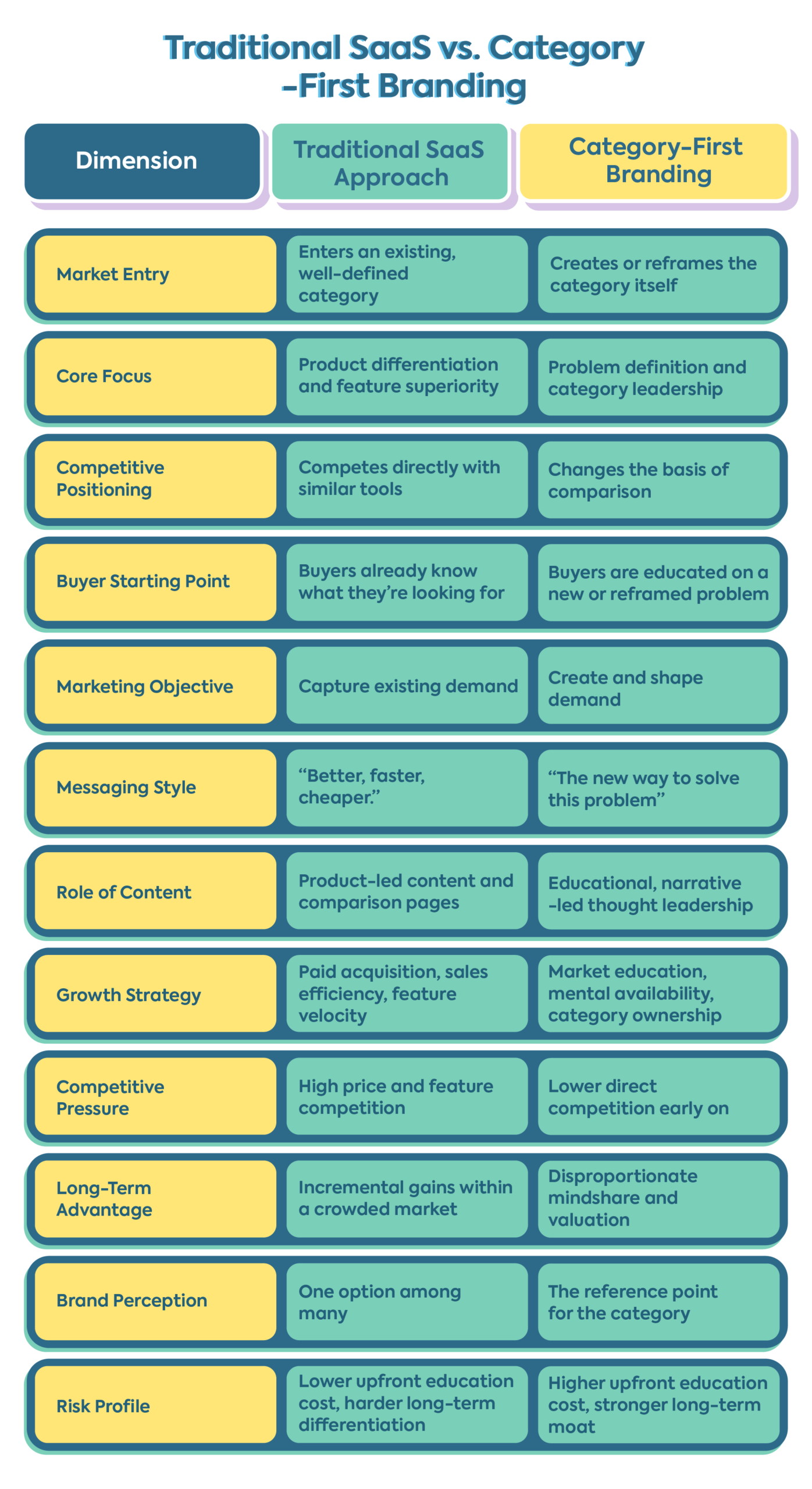
Why Category-First Branding Matters for SaaS
During the early era of SaaS, product functionality might be sufficient to attract users. In the modern world, feature parity is a common practice.
It is seldom that buyers make their choice due to slight variations in capabilities; they are making their choice due to clarity, belief, and vision. This is the reason category branding is vital:
1. Cut Through the Noise
Hundreds of competitors in each of the niche’s CRM, HR tech, analytics, and marketing automation products blur together. The name of the categories provides the user with a mental shortcut as to what you do.
2. Become the Go-To Solution
By defining the market, you possess the search traffic, thought leadership, and keywords of that category. You are put into consideration first by buyers.
3. Command Premium Pricing
Leaders of the category are not measured just by features but will be appreciated based on vision and influence. This image makes it possible to charge high prices.

The creation of categories has four major stages:
1. Identifying an Emerging Problem
Look beyond features. Ask yourself:
- What is the pain point that the customers have yet to express?
- What are the current solutions that are poor?
Scenario: Customers were grappling with product success, and product analytics could not embody the requirement to forecast growth. Therefore, Product-Led Growth Intelligence.
2. Define a New Category Name
Category name must be:
- Easy to remember
- Unlike current terminologies.
- Representative of a larger movement.
Goal: The objective is to make customers identify with your brand by stating the category name before they learn about it.
3. Educating the Market
Introducing a narrative that describes:
- Why the old way fails
- What is the new category of solution?
- Why is your brand best placed to dominate it?
It is believed that leadership, rather than marketing copy. It has material, address, structures, and even scholarly style definitions of the category.
4. Align Your Brand and the Go-To-Market Strategy
Defining a category at launch is one thing, but you need to incorporate it in:
- Website messaging
- Pitch decks
- SEO and content strategy
- PR and media relations
- Sales training
The category story should be supported at every touchpoint.

The most missed part of founders is now the practical application. The following are the step-by-step measures that can be adopted by SaaS companies nowadays.
Step 1: Champion the Problem Before the Product
- What is the fundamental issue that your software is addressing?
- Is this problem already perceived in the market?
- Do individuals already attempt to address this issue using the current instruments?
When the answer is no or not well, you should have the space to define the name of the category.
Step 2: Create a Category Narrative Document
The brands that excel in category marketing build a Category Narrative is a work-in-progress document, consisting of:
- The problem definition
- The category name
- The enemy (status quo)
- The vision for the future
- How your product can be the solution.
This document is based on the truth behind any marketing campaign.
Step 3: Integrate Category Terms Into SEO
Individuals who own a term own the search.
For example, in the case of your category being AI-Assisted Team Health Platforms, you optimize:
- Landing pages
- Blog titles
- Meta descriptions
- FAQ sections
to position ahead of competitors who start gaining ground.
Step 4: Train Your Sales Team in the Category Narrative
The product should not be used as a point of reference: Salespeople must go with the type of problem first:
“Today, teams suffer from this. This is why we refer to it as Collaborative Workflow Fragmentation. Our purpose-built solution is initially the platform for solving this.
This changes the argument to not about what tool, but how you resolve this new dilemma?”
Step 5: Publish Research That Validates the Category
Invest in survey and market research:
- Get information that it is real
- Reference industry studies
- Publish whitepapers
Your category is made real with third-party validation.

Drift: Conversational Marketing

Drift did not only create chat widgets. They designed and established the term Conversational Marketing. Their narrative made chat a feature rather than an approach. Instead of competing with the other marketing automation software, Drift claimed that buyers required real-time conversations with real people to paradigm shift.
Key takeaway: Decision strategy, not tool, should be defined.

HubSpot didn’t start with CRM. They coined a term, Inbound Marketing, which refers to the new process of attracting and converting leads by content instead of an outbound strategy.
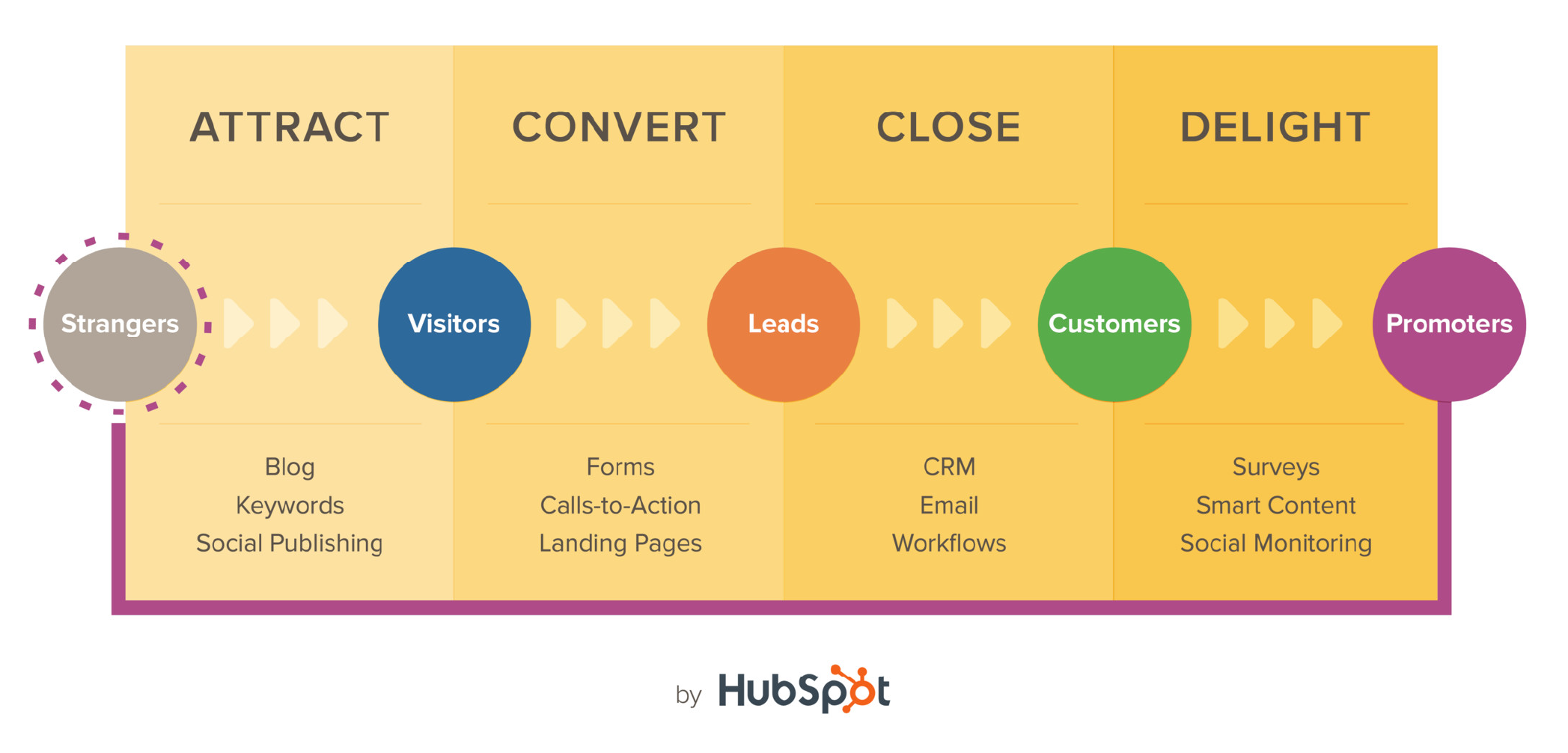
With their early investment in education, tutorials, blogs, and events, HubSpot did not merely develop a product; they became the go-to authority in the digital space.
Keytakeaway: HubSpot didn’t win by building a better CRM first; they won by naming the category, educating the market, and becoming the authority before selling the product.

The Challenge:
Overall, sales teams were working separately on CRM and call recording programs before Gong. Revenue processes such could not be subjected to a single analysis method.
The Category Creation:
Gong proposed the term Revenue Intelligence category to denote a combination of:
- Deal visibility
- Conversation analysis
- Artificial intelligence-based pipeline forecasting.
Unexpectedly, the discussion changed to include not call records and dashboards, but intelligence across revenue activities.”
The Impact:
Gong turned out not only to be another, but to be a leader of another type. Revenue intelligence started to be mentioned by investors and buyers as the required strategic investment.
Competitors fought back with a co-opting term, but Gong retained the lead with:
- Regular application of the category
- Research and benchmarks
- Community and certification programmes
Result:
Gong has become a unicorn and is still ruling its category due to its possession of words about it.

- Increase in search volume of your category term.
- Your category language that was used by the media and analysts.
- Partners and customers use your terms.
- Greater power of prices and reduced order periods.
- Thought leadership movement (invitations to speak, podcasts)
As before, when your category grows bigger than your company, you know you are making the right moves.

At Iris Creatives, we don’t believe SaaS companies win by shouting louder in crowded categories. They win by naming the problem first, shaping how the market understands it, and owning the narrative long before features enter the conversation.
Category-first branding isn’t a buzzword for us; it’s a growth system. We help SaaS teams uncover under-defined problems, architect new categories, and align brand, content, SEO, product storytelling, and go-to-market strategy around a single, defensible idea. The result isn’t just awareness, it’s mental availability, pricing power, and long-term differentiation.
In a world where features converge and tools multiply, the brands that endure are the ones that become the reference point. If you’re building a SaaS product that deserves to lead, not blend in, this is where Iris steps in.
Build the category. Own the language. Let the market follow. Explore how Iris Creatives helps SaaS companies design category-first growth strategies.

- What makes category-first branding especially important for SaaS?
SaaS markets mature fast, and feature parity arrives even faster. Category-first branding allows SaaS companies to escape feature wars by reframing how buyers think about the problem itself, shifting competition away from tools and toward vision, leadership, and strategic clarity.
- Is category-first branding only for early-stage startups?
No. While it’s powerful for startups entering noisy markets, category-first branding is equally effective for growth-stage and enterprise SaaS companies looking to reposition, expand demand, or defend against commoditization.
- How long does it take to see results from category-first branding?
Category creation is not a short-term performance tactic. Early signals include improved message clarity, stronger sales conversations, and increased thought leadership traction. Long-term results show up as owned search terms, media adoption of your language, and sustained pricing power.
- What’s the biggest mistake SaaS companies make with category branding?
Skipping education. Many teams name a category but fail to invest in research, content, SEO, sales enablement, and narrative consistency. Without reinforcement across touchpoints, the category never becomes real in the market.
- How does Iris Creatives help SaaS companies execute category-first branding?
Iris offers category-first brand and growth plans designed specifically for SaaS teams. These include category narrative development, positioning, SEO and content strategy, visual identity alignment, and go-to-market enablement, blending human strategy with AI-powered execution to help you define, defend, and dominate your category.
If you’re ready to stop competing inside someone else’s box and start building your own, Iris Creatives is ready to partner with you.